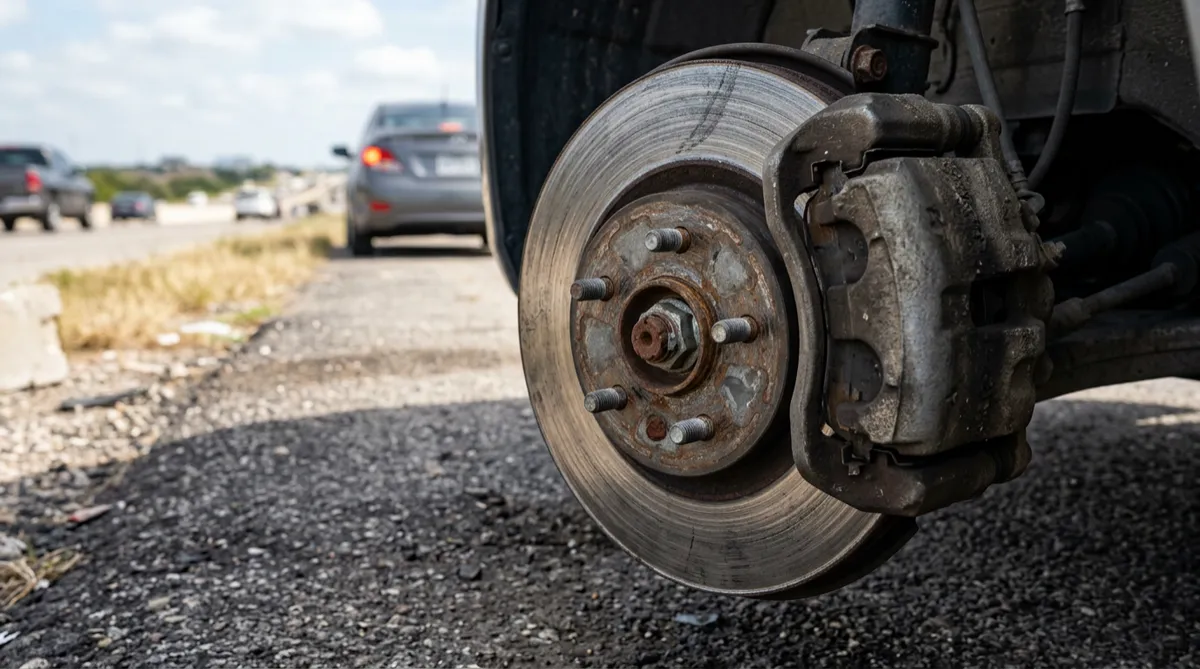
Brake Trouble in DFW: Drive It or Tow It?
Your brake pedal feels softer than it did yesterday. Or there is a grinding noise every time you slow down for a light on I-30. Or a red brake warning light just came on while you are doing 65 on Highway 360. Now you are asking the one question that matters: can I keep driving to a shop, or does this car need a tow? With brakes, a wrong guess costs more than money, so it is worth getting this right.
The short answer: stop driving and call for a tow if the pedal sinks toward the floor or feels spongy, the car pulls hard to one side when you brake, you hear metal-on-metal grinding, you smell burning near a wheel, you see fluid leaking, or the brake warning light is on and the pedal feels different. If your only symptom is a light squeal, the pedal feels normal, and the car stops the way it always has, a slow, careful drive straight to a repair shop is usually reasonable. The rest of this article explains how to tell the difference, what to do if the brakes give out while you are moving, and how the car should be towed once you decide.
What Your Brakes Are Telling You
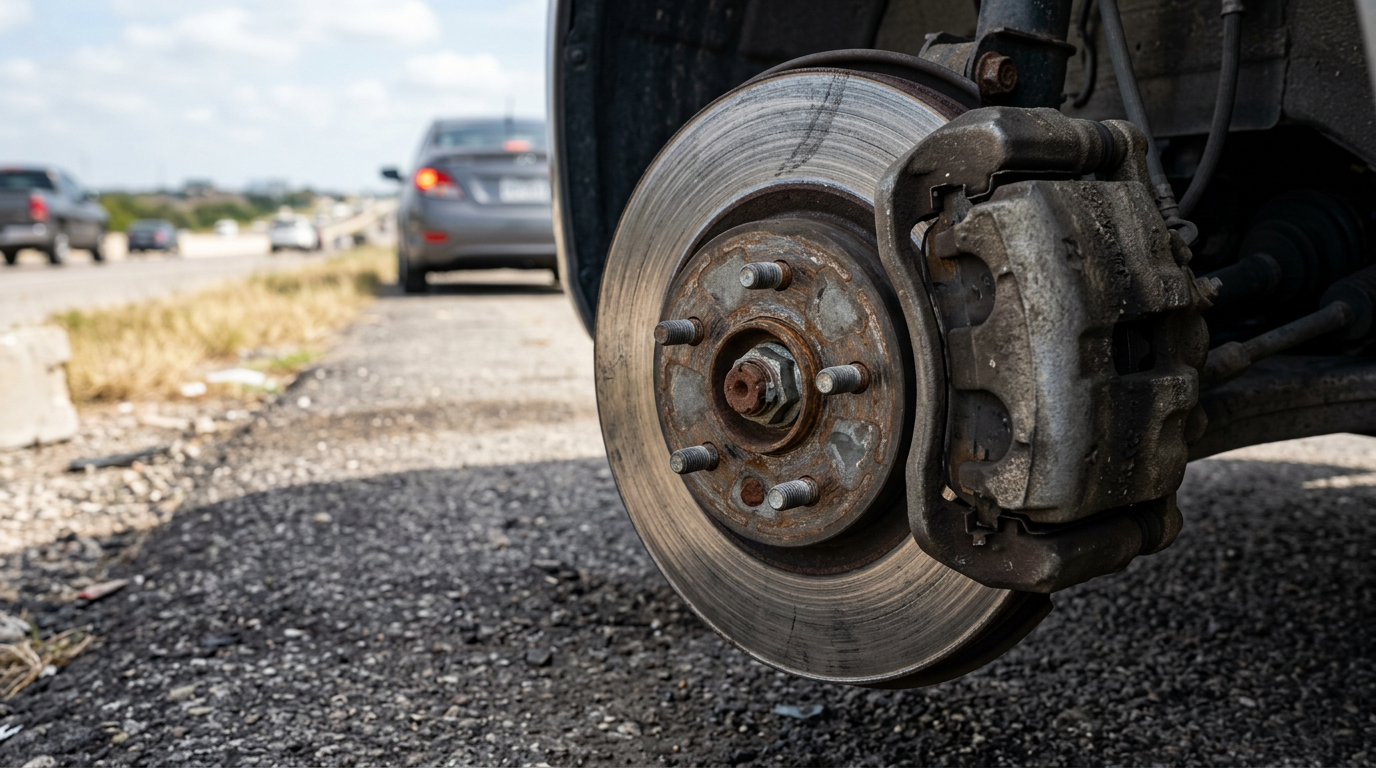
Your brakes use hydraulic pressure to press pads against rotors (or shoes against drums) at each wheel. Most brake problems send warning signs before they become emergencies, if you know what to listen and feel for:
- Squealing or chirping: many brake pads include a built-in wear indicator that makes a high-pitched sound when the pad is getting thin. It is an early warning, not usually an emergency, but it will not fix itself.
- Grinding: a harsh, metal-on-metal sound often means the pad material is gone and metal is rubbing the rotor. Stopping power drops and the repair grows the longer you drive.
- A soft, spongy, or sinking pedal: this can point to air in the lines, low fluid, or a leak. It is serious because the pressure that stops the car may be disappearing.
- Pulling to one side: one wheel is braking harder than the other, often from a stuck caliper, uneven wear, or a failing brake hose.
- Burning smell or smoke near a wheel: a brake that will not release can overheat. That is a stop-now sign.
- Warning lights: a red brake light can mean the parking brake is still set, the fluid is low, or the system has a fault. An ABS light is separate: it means the anti-lock function needs service, though the regular brakes may still work.
Drive It or Tow It? A Practical Guide
Brakes are the one system where a partial problem can turn into a complete one without much notice, and stopping distance on a busy DFW freeway leaves very little room for error. Every extra mile on a failing brake can also damage parts that were still good.
Call for a tow when:
- The pedal feels soft, spongy, or sinks slowly toward the floor.
- The car takes noticeably longer to stop than it should.
- You hear grinding or feel metal-on-metal contact when you brake.
- The car pulls sharply to one side under braking.
- You smell burning or see smoke from a wheel.
- Brake fluid is leaking.
- The red brake light is on and the pedal feels different than usual.
- A wheel feels like it is dragging, or the car will not roll freely.
A cautious drive to a shop may be reasonable when:
- The only symptom is a light squeal and the pedal is firm and normal.
- An ABS light is on but the car brakes normally. Get it checked soon.
- You feel mild vibration without any change in stopping ability.
- The shop is close and you can use slower surface streets instead of the freeway.
If you do drive, leave much more following distance than usual, brake early and gently, and avoid highways. The moment the pedal softens, a smell appears, or the car pulls, pull over safely and call for help.
Why DFW Driving Is Hard on Brakes
Commuting across the Metroplex often means long stretches of stop-and-go traffic on roads like I-35E, I-30, I-20, and Highway 360, mixed with fast freeway speeds. Every stop turns motion into heat, and a Texas summer afternoon adds more heat to a system already working hard. Very hot brakes can feel weaker after repeated hard stops, and old brake fluid absorbs moisture over time, which lowers the temperature at which it boils. Regular pad and rotor inspections and the fluid service schedule in your owner's manual are the simplest protection.
If Your Brakes Fail While You Are Driving
A pedal that goes soft or to the floor at speed is frightening, but a clear sequence helps you stay in control:
- Stay calm and turn on your hazard lights. Take your foot off the gas.
- Pump the brake pedal firmly several times. In some failures this can rebuild enough pressure to slow the car.
- Use the engine to help slow down. Shift to a lower gear, or use manual mode if your car has it. In an electric or hybrid vehicle, regenerative braking and a lower drive mode can help.
- Apply the parking brake slowly and steadily. Do not yank it, because locking the rear wheels suddenly can cause a skid.
- Steer toward the shoulder, an exit, or open ground. Avoid sudden swerves into other lanes.
- Do not shut the engine off while rolling. Doing so can lock the steering or remove power assist. Once the car has stopped, shift to park, set the parking brake, and then turn it off.
Even if the pedal comes back after you stop, do not drive the car further. A brake system that failed once can fail again.
Staying Safe While You Wait
Move as far from traffic as you safely can and keep your hazard lights on. On a busy freeway shoulder, staying inside with your seat belt fastened is often the safer choice, unless you smell burning or see smoke, in which case get out and move well away from the car and the travel lanes.
Why a Flatbed Is the Right Truck for Brake Problems
When the brakes are compromised, how the car is towed matters. A wheel-lift truck raises one end of the car while the other wheels roll along the road. If a caliper is stuck or a wheel is dragging, that rolling wheel can overheat, take more damage, or refuse to turn at all.
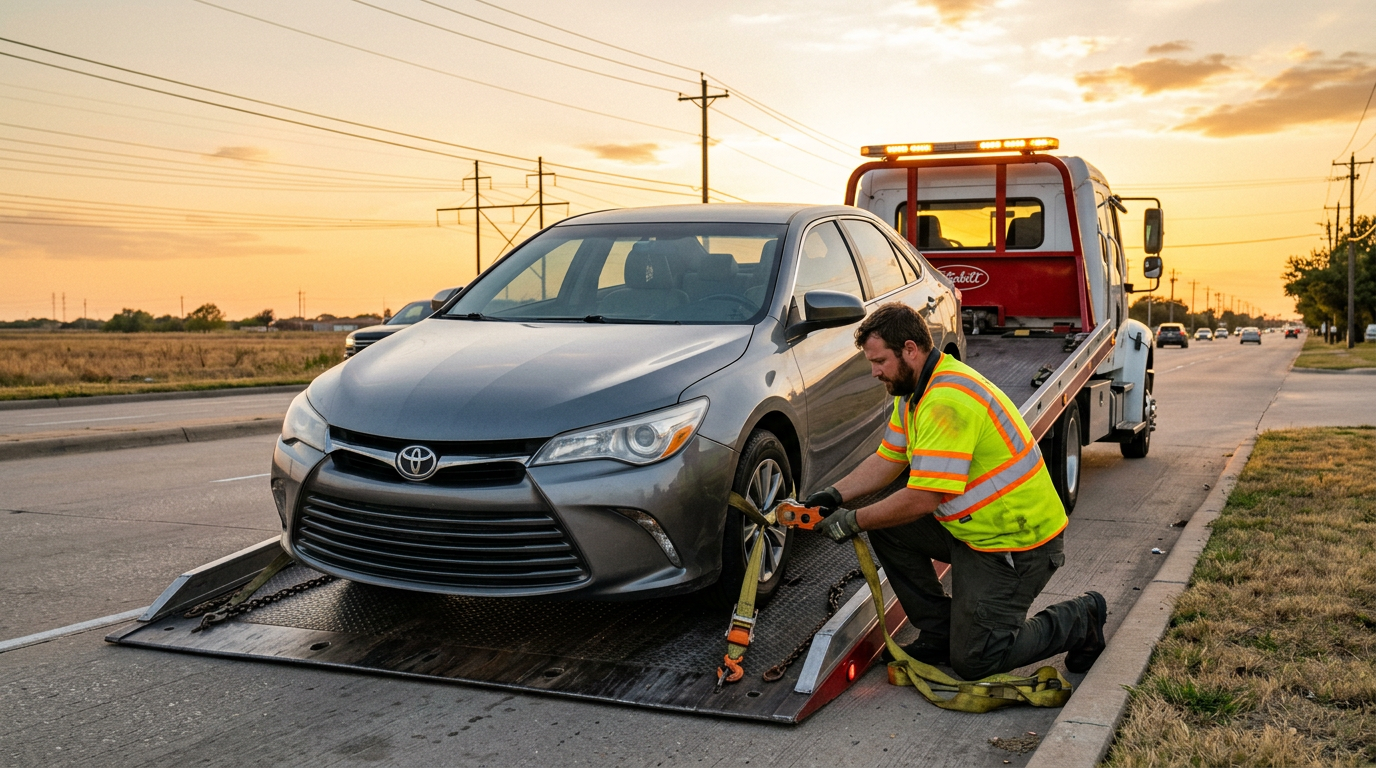
A flatbed carries the entire vehicle on the bed, so no wheel has to turn and no brake has to work during transport. Loading is safer too. A trained operator can winch a car with unreliable brakes onto the bed under control instead of depending on your pedal to hold it on a ramp. If one wheel is locked, the operator may use wheel dollies or another method to move the car without dragging it.
What to Tell the Dispatcher
The more the dispatcher knows, the better the truck and tools they can send. Have these details ready:
- Your exact location: the road, direction of travel, nearest exit, mile marker, or cross street.
- The vehicle: year, make, model, and whether it is front-wheel, rear-wheel, all-wheel, four-wheel, or electric.
- What the brakes are doing: soft pedal, grinding, pulling, burning smell, warning light, or fluid leak.
- Whether a wheel is locked: if the car will not roll freely, say so up front.
- Where it is going: a repair shop you trust, or home.
Common Brake Mistakes to Avoid
- Topping off the fluid and driving on. Low brake fluid often means worn pads or a leak. Adding fluid can hide the sign without fixing the cause.
- Waiting for a squeal to go away. Worn pads do not heal, and the repair usually gets larger.
The Bottom Line
Brake trouble is a problem where caution costs little and a bad guess can cost a great deal. If the pedal is soft, the car grinds, pulls, smells burnt, or leaks, do not keep driving. Pull over safely, call for a tow, and ask for a flatbed so the car can be moved without relying on brakes that cannot be trusted. If the symptom is mild and the pedal feels normal, a slow, short trip to a shop is reasonable, but a tow is the safer call whenever you are unsure.
If your brakes give you trouble somewhere in Arlington, Fort Worth, Dallas, or anywhere in between, Roadside Wrangler is ready to help around the clock. Tell the dispatcher what the pedal feels like and where you are, and they can send the right truck and get your vehicle safely to the shop or home of your choice, day or night.
Roadside Wrangler – 24/7 Towing Service
3004 E Pioneer Pkwy, Arlington, TX 76010
Phone: (469) 212-4712
Website: https://roadsidewranglertowing.com/
Open 24 hours