Car Overheating in DFW? Here’s What to Do (and When to Call for a Tow)
The Temperature Gauge Is Climbing. Here’s What to Do.
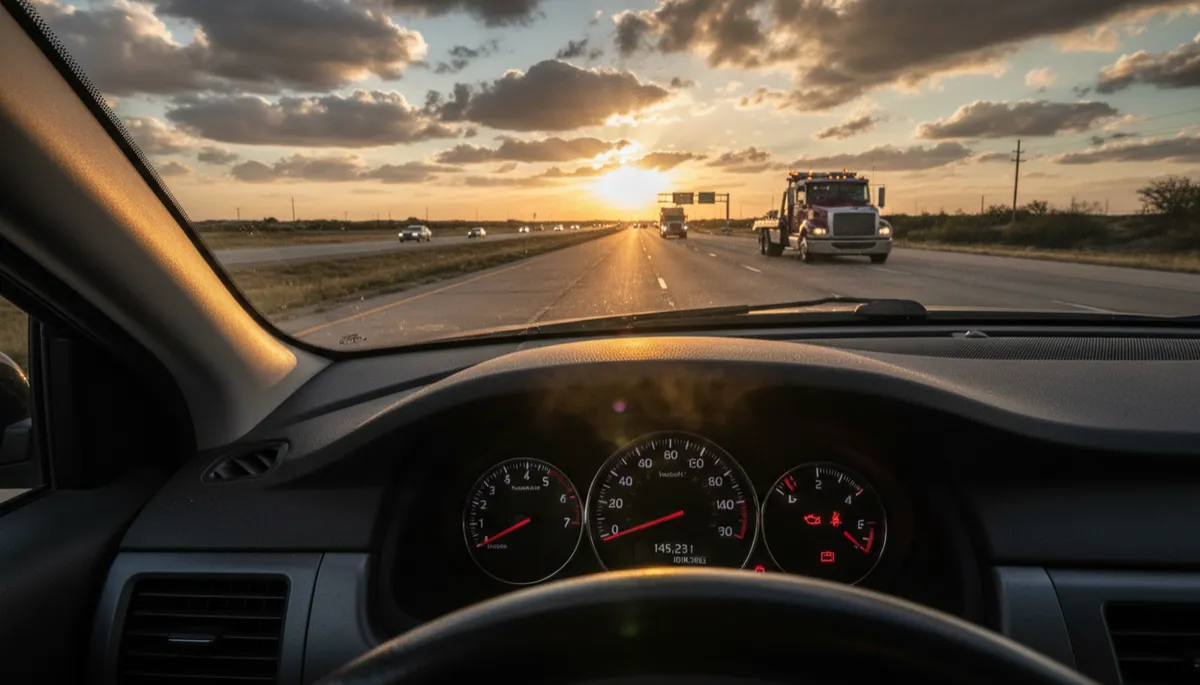
You’re crawling through traffic on I-30 heading into Arlington. It’s 103°F outside. The A/C is pushing hard. Then you see it — the temperature gauge, normally parked comfortably in the middle of the dial, has started drifting toward the red. By the time you reach the next interchange, the needle is there.
This is not something to wait out. Engine overheating is one of the most serious situations your vehicle can face, and in the DFW Metroplex — where summer temperatures are extreme and stop-and-go traffic on I-20, Loop 820, and I-35W is a daily fact of life — it happens more often than most drivers expect. Here’s exactly what to do, and how to know when driving any farther is the wrong call.
Act the Moment the Gauge Enters the Red
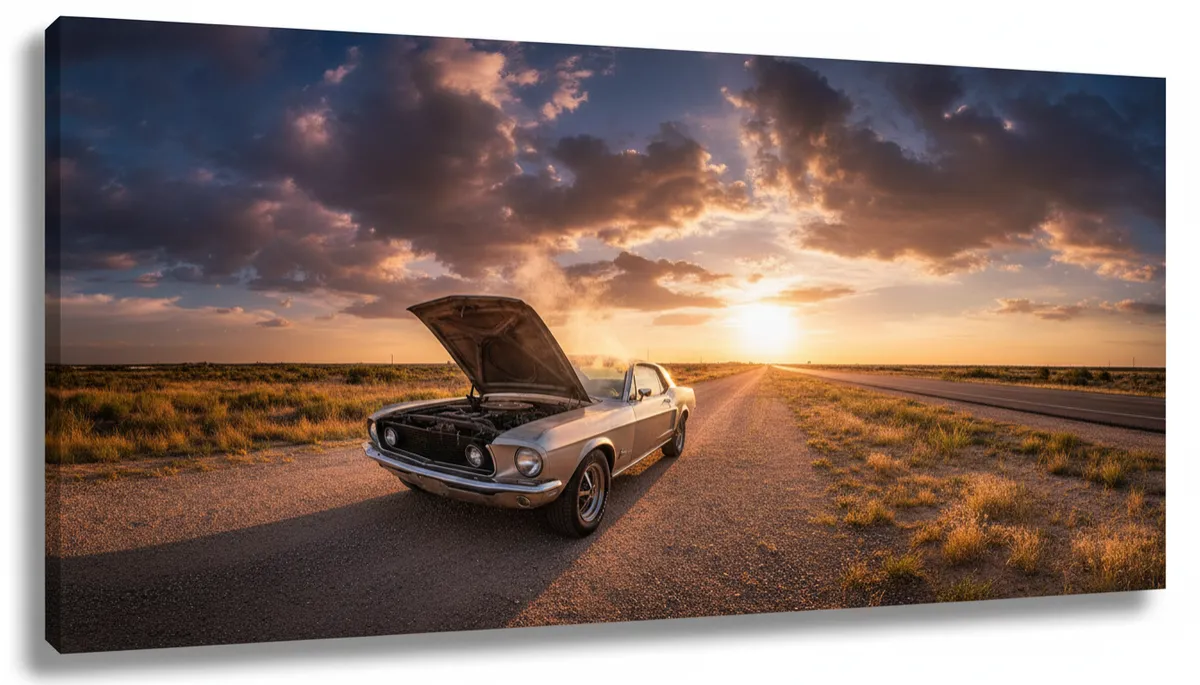
When the gauge spikes, speed matters more than strategy. Take these steps immediately:
Turn off the air conditioning. The A/C system places a real load on the engine. Shutting it off reduces heat generation on the spot.
Turn the cabin heater on — full blast. This sounds wrong, but it works. Your heater core is a small heat exchanger connected to the same coolant loop as the radiator. Running it pulls heat out of the engine and releases it into the cabin, giving the cooling system brief relief when it needs it most.
Pull over safely and immediately. Signal, move to the right shoulder, or take the nearest exit. Do not keep driving hoping the gauge comes down on its own. Every additional minute of operation on an overheating engine increases the risk of warped cylinder heads, a blown head gasket, or a seized engine — repairs that can easily exceed the value of the vehicle.
Shut the engine off. Once you’re safely stopped, turn the key. Don’t restart and try to limp anywhere. Let the car sit.
Two Mistakes That Make It Worse
Do not open the radiator cap while the engine is hot. The cooling system runs under pressure. Opening the cap when it’s hot can release a violent burst of scalding coolant and steam. Wait until the engine has fully cooled — at least 30 minutes — before touching anything near the radiator.
Do not keep driving. A temperature gauge in the red is the engine telling you that damage is happening right now. A few more miles can mean the difference between topping off coolant and replacing the engine entirely.
Why Engines Overheat: The Most Common Causes
Understanding what went wrong helps you communicate clearly with a mechanic and gives you a sense of whether you’re dealing with a simple fix or something more serious.
Low or leaking coolant is the most common cause. Coolant absorbs heat from the engine block and carries it to the radiator, where it dissipates. When coolant level drops — from a slow leak or deferred maintenance — the system can’t do its job.
A stuck thermostat can block coolant from flowing into the engine when the engine needs it. Temperature climbs with nowhere for the heat to go.
A failing water pump circulates coolant through the engine and radiator. When the pump’s impeller wears or a seal fails, circulation slows or stops entirely.
A clogged or damaged radiator can’t shed heat effectively. Scale and deposits build up inside over time, reducing flow. In DFW’s dusty highway environment, the radiator fins can also get blocked externally — reducing airflow and heat dissipation at the same time.
A blown head gasket is the more serious scenario. It allows combustion gases into the cooling system or coolant into the combustion chamber. Watch for white exhaust smoke, a sweet smell from the engine bay, or milky-looking oil on the dipstick alongside the temperature spike.
When You Might Be Able to Handle It Yourself
If the car has fully cooled — allow at least 30 minutes, more if possible — check the coolant reservoir. It’s the translucent plastic tank near the radiator, marked MIN and MAX. If the coolant level is low and you’re seeing no other warning signs, adding pre-mixed coolant (available at most gas stations and auto parts stores) may be enough to get you back on the road.
This self-service option only applies when all of the following are true:
- The engine has fully cooled
- There is no steam or smoke coming from under the hood
- There is no burning smell
- The oil looks normal on the dipstick — not milky or foamy
- The car starts normally and the temperature gauge returns to its normal range within a minute or two
If any of those conditions fails, do not drive. The car needs a tow.
Signs the Car Should Not Be Driven at All
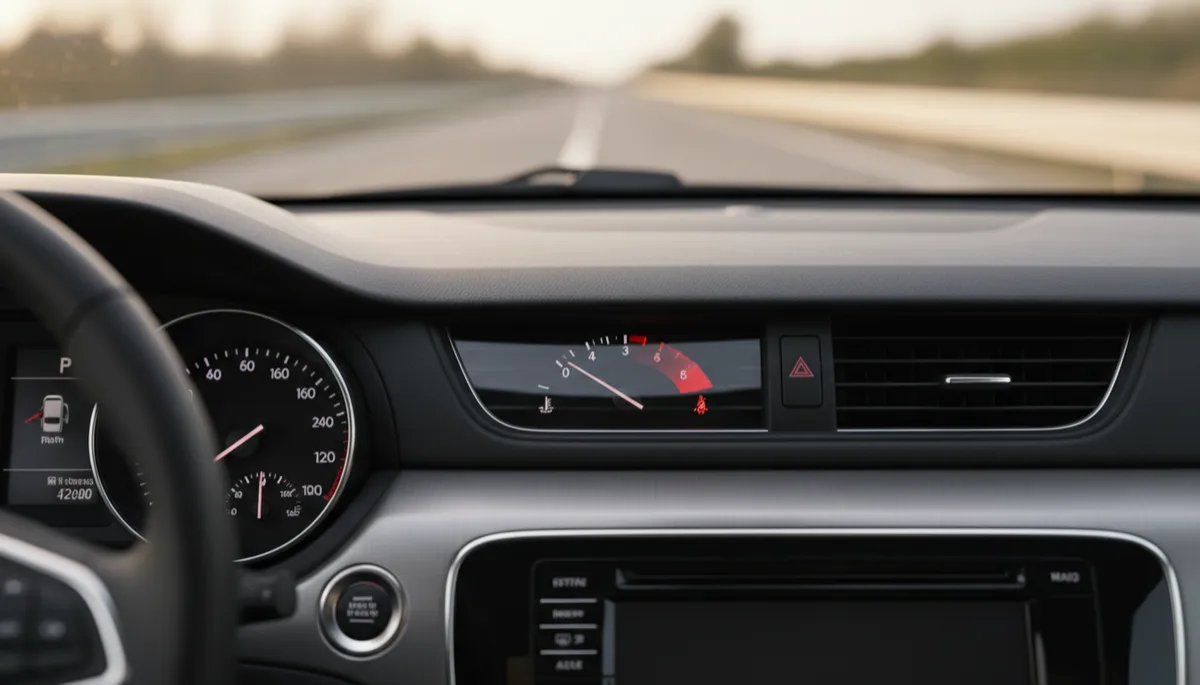
Some overheating situations indicate damage that makes driving dangerous or certain to cause additional harm. Do not attempt to drive if you observe any of the following:
Steam or smoke rising from under the hood. Coolant is boiling or burning on hot engine surfaces. The engine is already past safe operating temperature.
A burning smell. This can mean coolant hitting hot metal, or — in a worse scenario — oil leaking onto the engine.
The oil warning light activating alongside the temperature gauge. This combination is a significant red flag for head gasket failure, oil loss, or both.
The engine stalling and not restarting. Severe overheating can trigger a hot shutdown where the engine won’t turn over until it fully cools. In worse cases, internal damage prevents restart entirely.
Coolant pooling visibly under the car. A significant leak means the cooling system has failed in a way that can’t be resolved by simply adding fluid.
In any of these situations, the vehicle should be transported on a flatbed tow truck — not driven, and not wheel-lifted if the drivetrain may be compromised. Flatbed towing keeps all four wheels off the ground, protecting an already-stressed engine from additional strain.
Why DFW Creates More Overheating Risk
The Dallas-Fort Worth Metroplex creates conditions that stress cooling systems harder and faster than most parts of the country. Summer temperatures regularly exceed 100°F across the region. When you factor in engine compartments — which absorb radiant heat from the road surface in addition to ambient heat — the thermal environment a cooling system operates in is significantly more demanding than the weather reading alone suggests.
Add extended idling in stop-and-go traffic on I-30, I-20, I-35W, Loop 820, and the Dallas North Tollway, where vehicles may crawl or sit stationary for long stretches at a time, and the situation compounds. At highway speed, airflow through the radiator provides supplemental cooling. In slow traffic, the radiator depends almost entirely on the cooling fan — which is a significant ask on a 103°F afternoon.
Older vehicles, high-mileage vehicles, and those with overdue cooling system service are especially vulnerable. But even well-maintained vehicles can overheat under the right combination of heat, load, and traffic.
Prevention: What to Do Before the Gauge Ever Moves
A few straightforward habits dramatically reduce the chance of being stranded on a DFW highway with an overheating engine.
Check your coolant level monthly. About 60 seconds under the hood. Find the translucent coolant reservoir near the radiator and verify the level sits between MIN and MAX.
Flush the cooling system on schedule. Most manufacturers recommend every 30,000 to 50,000 miles, though intervals vary by vehicle and coolant type. Your owner’s manual has the specific interval.
Inspect radiator hoses and belts before summer and before road trips. Look for cracks, swelling, or soft spots. A hose failure typically happens without warning in extreme heat, and when it goes, it takes the coolant with it.
Make sure the radiator cap seals properly. A worn cap releases system pressure too early, which lowers the coolant’s effective boiling point and reduces the system’s ability to manage heat when conditions are at their worst.
These steps are inexpensive and take minutes. The engine repairs that follow a severe overheating event are neither.
If Your Car Overheats in DFW — We’re Ready
When the engine has overheated and the car should not be driven, Roadside Wrangler – 24/7 Towing Service is available around the clock across Arlington and the broader DFW Metroplex. Our flatbed tow trucks respond to breakdowns on I-30, I-20, I-35W, Loop 820, city streets, and parking lots at any hour of the day or night. Call us at (469) 212-4712, visit us at roadsidewranglertowing.com, or find us at 3004 E Pioneer Pkwy, Arlington, TX 76010. We are open 24 hours a day, every day — because overheating engines don’t keep business hours.