What Happens When a Car Is Towed in Park?
Towing, Roadside Assistance, Transmission, DFW Towing Service
What Happens When a Car Is Towed While It's in Park?
Towing a car that's in park isn't always avoidable. The outcome — and whether any damage occurs — depends almost entirely on how the vehicle is towed. A flatbed tow truck carries all four wheels off the ground and creates zero drivetrain stress. Dragging a car on its driven wheels while the transmission lock is engaged is a very different situation, and it’s where real damage can happen.
What “Park” Actually Does Inside Your Transmission
When you move the gear selector into park on an automatic transmission, you’re engaging a simple but critical mechanical lock. Inside the transmission, a small metal component called the parking pawl drops into a notched ring on the transmission’s output shaft. That output shaft is what ultimately turns your driven wheels through the axles or driveshaft.
Once the pawl is engaged, the output shaft can’t rotate. In normal use, this is exactly what you want: it keeps a parked vehicle from rolling on a hill when the engine is off. The pawl is engineered to hold the car stationary, usually with help from the parking brake, not to absorb the force of a powerful tow truck trying to drag the vehicle across pavement with the wheels locked in place.
That design intent matters. As long as the vehicle is not being forced to move, the parking pawl can do its job for years without issue. Problems start when someone attempts towing a car in park in a way that tries to rotate components the pawl is physically holding still.
What Happens If a Car in Park Is Dragged on Its Wheels
The real risk with a car stuck in park towing scenario appears when the vehicle is dragged with its driven wheels on the ground. The tow truck is trying to move the car forward; the parking pawl is trying to keep the output shaft from rotating. Something has to give.
Parking pawl damage: Under enough force, the pawl can shear or chip. Once that happens, the transmission may no longer “lock” in park. You might feel the vehicle roll on slopes, or hear grinding when shifting into park in the future. In severe cases, metal fragments can circulate inside the transmission, leading to more extensive internal damage and expensive repairs.
Stress on other drivetrain parts: Axles, CV joints, driveshafts, and differential gears are all connected to that locked output shaft. Forcing them to turn against a solid lock can twist or crack components, especially on heavier vehicles or during aggressive vehicle recovery attempts.
Tire and wheel damage: If the wheels are fully locked and simply dragged, the tires can scrub across the pavement instead of rolling. This can create flat spots, burn through tread, or in extreme cases drag the tire down to the cords. Wheels and suspension parts can also be stressed when they’re forced to skid instead of rotate normally.
The critical variable is which wheels are driven. On a front-wheel-drive (FWD) vehicle, the front wheels are tied directly to the transmission output. On rear-wheel-drive (RWD), it’s the rear wheels. On all-wheel-drive (AWD) and four-wheel-drive (4WD), all four wheels can be connected through the drivetrain. If those driven wheels are on the ground and the transmission is in park, towing the car by pulling it along the road can create exactly the kind of force the parking pawl was never meant to handle.
Flatbed Towing vs. Wheel-Lift Towing — Why the Method Matters
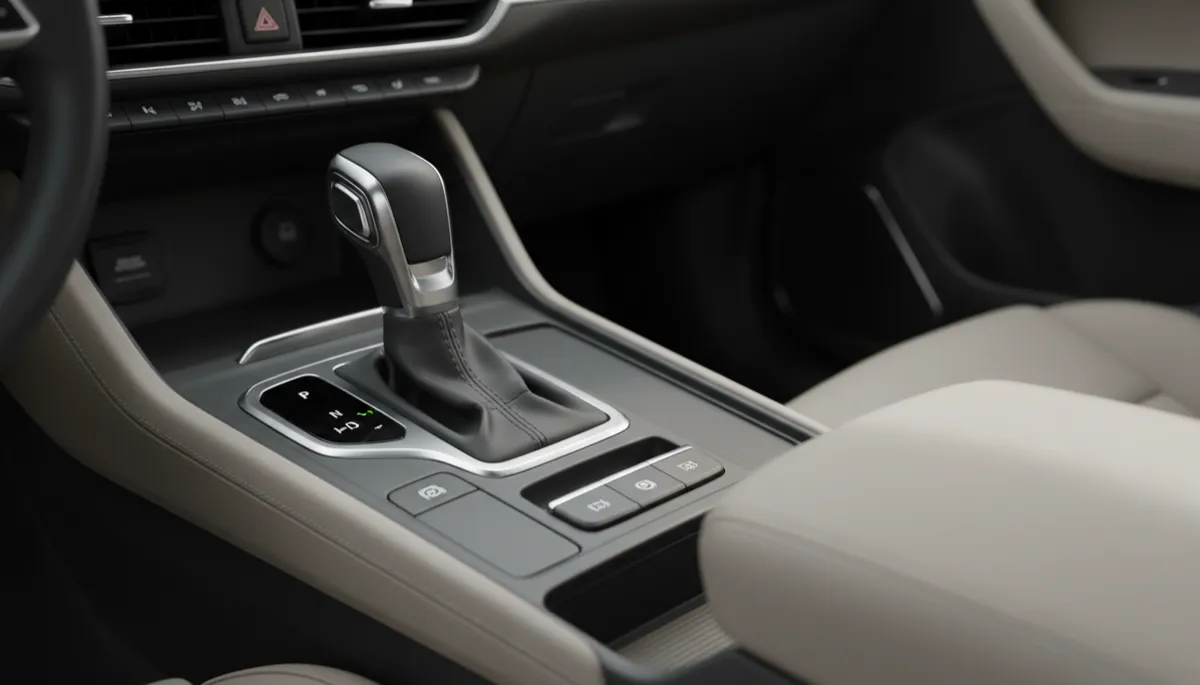
How your vehicle is hooked up to the tow truck determines whether park is a problem.
Not all tow trucks move a vehicle the same way. The two most common light-duty methods in the DFW Metroplex are flatbed towing and wheel-lift towing, and they treat a car in park very differently.
Flatbed (Rollback) Towing
A flatbed, or rollback, tow truck tilts its bed, winches the vehicle up, and then levels the platform so the car rides with all four wheels off the ground. Once the vehicle is fully on the deck and secured, the drivetrain doesn’t move at all during transport — it’s effectively just cargo on a trailer.
If your vehicle is in park, or even completely disabled, a flatbed tow truck can still load it safely. There is no rotational force on the transmission, so there’s no risk of transmission damage from towing caused by the parking pawl. For vehicles that are stuck in park, AWD/4WD, or low to the ground, flatbed towing is the safest and most universally appropriate choice.
Wheel-Lift (Modern Wheel Cradle) Towing
A wheel-lift tow truck uses a metal cradle under either the front or rear wheels, lifting those wheels off the ground while the opposite axle remains on the road. The wheels that stay on the pavement must be able to roll freely. That means the transmission should be in neutral, and the parking brake released, for the wheels on the ground to turn without fighting the drivetrain.
Professional operators in the Dallas–Fort Worth area, working under Texas licensing rules and city regulations, are trained to avoid stressing the drivetrain. With a car in park, they will typically:
Attempt to shift the vehicle into neutral before lifting, using the proper procedures and any shift-lock override the vehicle provides, or
Position the wheel-lift so the non-driven wheels are on the ground, reducing stress on the transmission, or
Choose a flatbed tow truck instead, especially for AWD/4WD vehicles or when the shifter cannot be moved out of park.
If a wheel-lift is used incorrectly on a vehicle in park with the driven wheels on the ground, that’s when the parking pawl, axles, and tires can suffer damage. That’s why, if you’re requesting a tow truck Dallas-Fort Worth for a stuck-in-park situation, it’s reasonable to confirm the towing method when you call.
Cars Stuck in Park vs. Cars Simply Left in Park
There’s an important difference between a car that’s left in park and a car that’s stuck in park. If the shifter moves normally, your tow operator can usually place the transmission in neutral before loading, or park the vehicle safely once it’s off the truck. The real challenge is a vehicle that will not shift out of park at all, even with the brake pedal pressed.
Common Reasons a Car Gets Stuck in Park
Dead or very weak battery: Most modern automatics use an electronic shift interlock that needs electrical power. If the battery is flat, the system may refuse to release the shifter, even though the mechanical transmission itself is fine.
Faulty brake switch: The interlock usually requires a signal that the brake pedal is pressed. A bad brake light switch can prevent that signal, so the shifter remains locked in park even if you’re standing on the pedal.
Failed shift interlock solenoid: This is the small component that physically unlocks the gear selector when conditions are met. If it fails electrically or mechanically, the shifter can feel frozen in place.
Mechanical shifter or linkage problems: Wear, broken parts, or spilled liquids in the console can jam the shifter mechanism or prevent the cable from moving the transmission lever.
If the issue is a dead battery, a simple jump start may restore power and let the interlock release, so you can shift into neutral or drive normally. Many vehicles also have a shift-lock override: a small plastic-covered slot near the shifter that allows manual release with a key or small tool. Your owner’s manual shows the exact location and procedure. This can be the difference between driving away and needing a tow at all.
Drivetrain Type Changes the Calculation
How risky towing a car in park is also depends on whether your vehicle is FWD, RWD, or AWD/4WD. The basic rule: wherever the engine’s power normally goes is where you need to be most careful about towing with the transmission locked.
Front-wheel drive (FWD): The front wheels are driven. A wheel-lift tow that picks up the front and leaves the rear wheels on the ground can be acceptable if the transmission is in neutral and the rear wheels roll freely. If the car is stuck in park, a wheel-lift that leaves the front wheels on the ground is more likely to cause damage.
Rear-wheel drive (RWD): The rear wheels are driven. Lifting the front and letting the rear roll can work when the transmission is in neutral. Again, dragging it with the rear wheels on the ground while in park can overload the parking pawl and driveline components.
All-wheel drive (AWD) and four-wheel drive (4WD): Here, power can be routed to all four wheels, and differentials and transfer cases tie everything together. Manufacturers often specify flatbed towing only, regardless of gear position, to prevent internal damage. When an AWD or 4WD vehicle cannot shift to neutral, a flatbed is almost always the correct and only safe answer.
If you’re unsure of your drivetrain type, your owner’s manual and the badges on the vehicle can help, and a reputable DFW towing service will ask the right questions before dispatching the appropriate truck.
What to Do If Your Car Won’t Shift Out of Park
Press the brake pedal firmly. Most automatic transmissions will not release the shifter unless the brake pedal is fully depressed. Make sure your foot is solidly on the pedal and try moving the shifter again.
Check for a battery issue. Dim interior lights, slow or no cranking, or dead accessories can all point to a weak or dead battery. If possible, try a jump start. Restoring electrical power may bring the shift interlock back to life and allow normal shifting out of park.
Locate the shift-lock override. Look near the gear selector for a small slot or removable cover. With the parking brake firmly set, follow the instructions in your owner’s manual to insert a key or tool and manually release the shifter. This is an intended emergency feature, not a hack.
Check the parking brake. On some vehicles, the parking brake position interacts with shifting. Verify it’s fully engaged before trying the override, or fully released if your manual calls for that during the procedure.
⚠️ Warning: Do not force a stuck shifter. Yanking or slamming it can break internal parts, cables, or the interlock mechanism, turning a simple electrical issue into a more expensive mechanical repair.
If these steps don’t work, a roadside technician can check whether the problem is electrical (battery, brake switch, solenoid) or mechanical, and then recommend the safest way to move the vehicle — often a flatbed tow truck when the transmission won’t leave park.
Frequently Asked Questions
Q: Can a car be safely towed when it's in park?
A: Yes — if the right method is used. A flatbed tow truck lifts all four wheels off the ground, so the transmission lock is irrelevant and the drivetrain is never stressed. The risk only arises when a car in park is towed with its driven wheels on the ground.
Q: Will towing a car in park damage the transmission?
A: It can, if a wheel-lift truck is used and the driven wheels are on the ground. The parking pawl — the internal pin that locks the transmission — can shear under sufficient force. Flatbed towing eliminates this risk entirely.
Q: My car is stuck in park and won't shift. What should I try first?
A: Press the brake pedal firmly — most automatics won't shift without brake input. If the battery is weak or dead, a jump start may restore the electrical power needed to release the shift interlock. Many vehicles also have a manual shift-lock override near the gear selector; the location is in the owner's manual.
Q: Why do modern cars get stuck in park?
A: Most modern automatic transmissions use an electronic interlock to prevent accidental gear changes. Any failure in that circuit — dead battery, faulty brake switch, or a broken shift interlock solenoid — can leave the car stuck in park.
Q: Should I request a flatbed if my car won't shift out of park?
A: Yes. When a vehicle cannot shift to neutral before towing, a flatbed is the appropriate choice. It removes all risk of drivetrain damage and is suitable for any vehicle type, including AWD and 4WD.
Conclusion
A car in park can be towed safely — but only when the towing professional uses the right method. If a vehicle cannot shift to neutral, if it has an AWD or 4WD drivetrain, or if there’s any uncertainty about the drivetrain, a flatbed tow truck is the appropriate choice and eliminates the risk of transmission damage from towing. And if the underlying cause is a battery or electrical issue, a qualified roadside technician may be able to get you out of park and back on the road without a tow at all.
24/7 Towing and Roadside Help in DFW
If your situation requires professional towing or roadside assistance in the Dallas-Fort Worth area, 24/7 help is available.
Roadside Wrangler – 24/7 Towing Service
Towing and roadside assistance serving the Dallas-Fort Worth area.
Open 24 hours
Phone: (469) 212-4712
Address: 3004 E Pioneer Pkwy, Arlington, TX 76010
Website: https://roadsidewranglertowing.com/
Need towing or roadside assistance in DFW? Call (469) 212-4712 for 24/7 assistance.