Car Won't Start? Battery, Starter, or Alternator in DFW
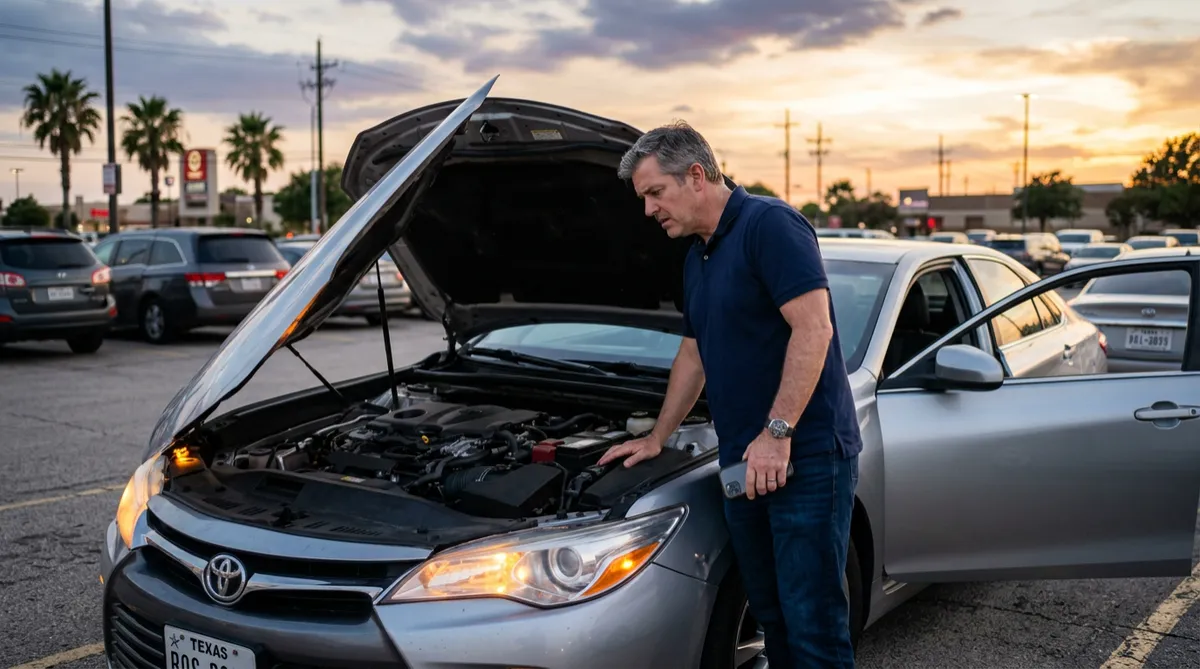
You turn the key or press the button, and the car doesn't do what it did yesterday. Maybe there is a rapid clicking. Maybe there is a single heavy clunk. Maybe the engine cranks and cranks but never catches. You are sitting in a parking lot in Arlington, Grand Prairie, or Fort Worth, and the question is simple: is this a quick fix, or do I need a tow?
Here is the direct answer. Your car is already telling you what is wrong, through its sounds and the way the lights behave. Rapid clicking and dim lights usually point to a weak battery. One loud click with bright lights usually points to the starter. An engine that turns over normally but never fires points toward fuel or spark. A car that starts with a jump and then dies again soon after points toward the alternator. Knowing which one you have decides whether a jump start will help or whether you are wasting time.
Start With What You Hear and See
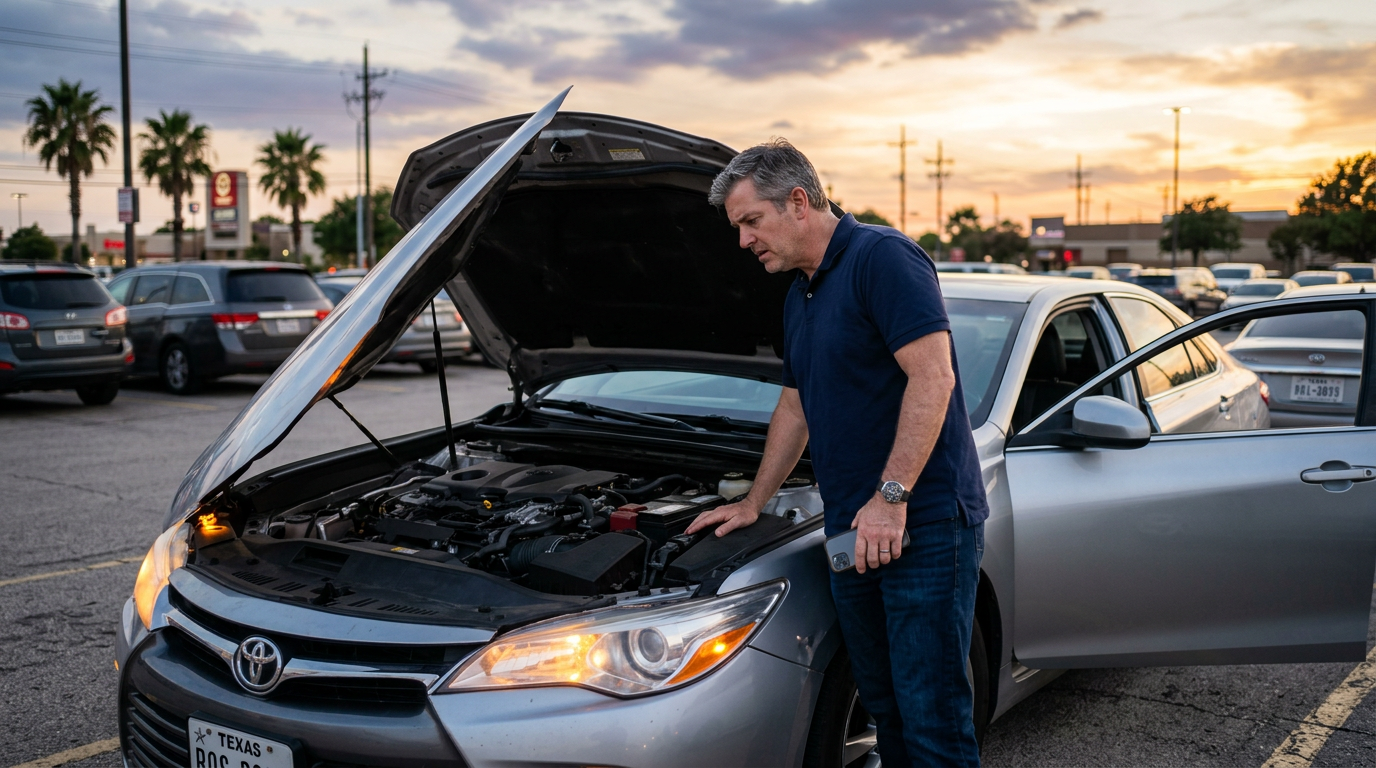
Before you open the hood, spend thirty seconds on observation. Turn the key to the on position without cranking and look at the dashboard. Then try to start the car and notice the sound, the dash lights, and the interior lights.
- Rapid clicking, dim or flickering lights: the starter is asking for power and not getting enough. This is the classic weak or dead battery pattern.
- One loud click or a clunk, with bright lights: the battery seems to have power, but the starter is not turning the engine. That leans toward a starter or starter connection problem.
- Silence, with no dash lights at all: a fully dead battery, a loose or badly corroded terminal, or a connection that has failed completely.
- Normal cranking sound, but no start: the battery and starter are doing their jobs. The problem is more likely fuel delivery, ignition, or an engine sensor.
These are patterns, not guarantees, but as a first read they save you from guessing.
The Dead or Weak Battery
A battery is the most common reason a car refuses to start, and the easiest to confirm. The signs are dim headlights, a dashboard that flickers or goes dark when you try to crank, and fast clicking. If you left a light on, or the car sat unused for a while, the cause is usually obvious.
Heat is hard on batteries, and North Texas gives them plenty of it. A battery worn down over a hot summer can seem fine for weeks and then quit without warning. If yours is several years old and has been slow to crank lately, that was probably the warning.
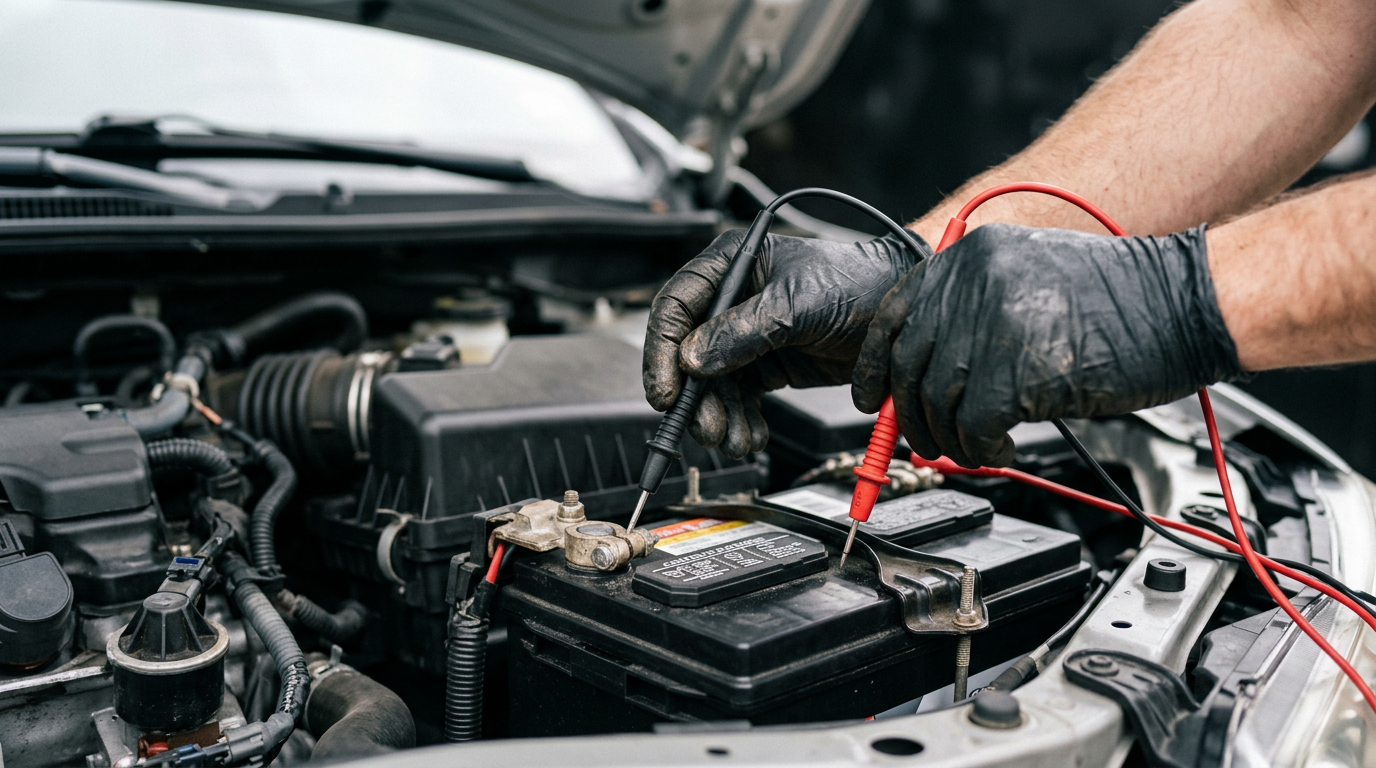
Before you assume the battery itself is bad, look at the terminals. White, blue, or green crust around the posts can block the flow of power, and a clamp that wiggles by hand is not making a solid connection. Cleaning corrosion and tightening a loose clamp fixes many no-start problems. If the terminals look clean and tight and the battery is weak, a jump start will usually get the engine running.
The Starter
The starter is the small motor that turns the engine over. When it fails, you often get one decisive click or a grinding noise while the lights and radio stay bright. That tells you the battery is delivering power but the engine is not turning.
A jump start will not fix a bad starter, because the battery was never the problem. Avoid cranking for long stretches; short attempts with a pause in between are easier on the starter and the battery. If the car does start, take it to a shop rather than assuming the problem is gone.
The Alternator
The alternator recharges the battery and runs the electrical system while the engine is running. When it fails, the battery slowly drains instead of being topped up. The result is a car that starts with a jump, runs briefly, and then dies again.
Warning signs include a battery or charging light, headlights that dim and brighten, a whining noise from the engine bay, or electrical features that act strangely while driving. If a jump-started car dies again within minutes, or will not restart after you shut it off, suspect the alternator. Driving on a failing alternator means running on whatever charge the battery has left, and that can end on a busy highway.
When the Engine Cranks but Will Not Start
If the engine turns over at a normal speed but never catches, you are likely looking at fuel, ignition, or a sensor issue. Start simple: check the fuel gauge, because gauges are not always reliable and an empty tank is a more common cause than people admit. If you are out of fuel, fuel delivery can solve it without a tow.
A quick check is to turn the key to the on position, without cranking, in a quiet spot and listen near the rear of the car for a brief hum, which is often the fuel pump priming. Silence may point to the pump or its power supply, though this is not a certain test on every vehicle. A cranking engine that will not start is rarely a roadside fix, so call for help rather than cranking until the battery drains.
Other Causes That Look Like a Dead Car
Not every no-start is a major repair. Rule out these smaller causes before you call anyone:
- Gear selector: most automatic cars will only start in Park or Neutral. Make sure the shifter is fully seated.
- Key fob or security system: a weak fob battery or a flashing security light can block a start even when everything else is healthy. Check your owner's manual for the backup method.
- Brake pedal and steering lock: push-button cars need a firm press on the brake, and a stuck key may turn if you gently move the steering wheel.
Jump Starting Safely, and When Not To
If the signs point to a weak battery, a jump start is reasonable, but do it carefully. Read your owner's manual first, since some vehicles have remote jump terminals under the hood rather than direct battery access, and hybrids and EVs have their own rules for their 12-volt systems. Connect the cables in the order the manual recommends, and keep the clamps from touching each other.
Do not try to jump a battery that is cracked, leaking, bulging, or visibly damaged, or one surrounded by fluid or a rotten-egg smell. Leave it alone and get professional help. Also think about where you are. The shoulder of I-30 or SH 360 is no place to lean over an engine with traffic passing. If you are not in a safe spot, keep your hazard lights on and stay buckled in the vehicle, or move well away from traffic if that is safer.
How to Decide Between a Jump and a Tow
A simple way to think about it:
- Jump start makes sense when you have clicking, dim lights, a clean battery connection, and an older or recently drained battery. If the car starts and stays running, get the battery tested.
- A tow makes sense when the car did not start after a jump, started and died again, made a single loud click with bright lights, cranked but never fired, or showed signs of an electrical problem like a burning smell.
When a tow is the right call, a flatbed is usually the safest way to move a car that cannot run, especially for all-wheel-drive vehicles, low-clearance cars, or anything with a transmission you would rather not risk. When you call, tell the dispatcher what you saw and heard, whether a jump was tried, and whether the car is in Park. Give your exact location and mention hazards such as a busy lane or a tight garage. Ask for the quote before the truck is dispatched, and say where you want the car taken, whether home or a repair shop of your choice.
A Few Habits That Prevent the Next No-Start
Slow cranking is often the first sign of a weak battery, so do not ignore it. Have the battery and charging system tested as the car ages, keep the terminals clean and tight, take a dash battery light seriously, and keep jumper cables or a portable jump pack in the trunk with a flashlight and phone charger.
If your car won't start anywhere in Arlington or across the DFW Metroplex, Roadside Wrangler – 24/7 Towing Service is ready to help day or night. Whether you need the car moved safely to a shop or you are simply not sure what you are dealing with, call and tell us what you are seeing and hearing, and we will help you figure out the next step.
Roadside Wrangler – 24/7 Towing Service
3004 E Pioneer Pkwy, Arlington, TX 76010
Phone: (469) 212-4712
Website: https://roadsidewranglertowing.com/
Open 24 hours