Dead Battery in DFW? Here's What to Do
Roadside Assistance, Dead Battery DFW, Jump Start Arlington TX
Dead Battery in DFW? Here's Exactly What to Do
You turn the key or push the start button and… nothing. Maybe you hear a weak click, maybe the dash lights flicker, or maybe it’s completely dead. You’re sitting in a DFW parking lot, your driveway in Arlington, or on the shoulder of I‑20 wondering what to do next. Here’s the simple order: stay calm, make sure you’re safe, turn off everything electrical, flip your hazard lights on if you’re near traffic, and then decide whether a safe jump start is possible where you are — or if it’s time to call for professional roadside assistance DFW drivers rely on every day.
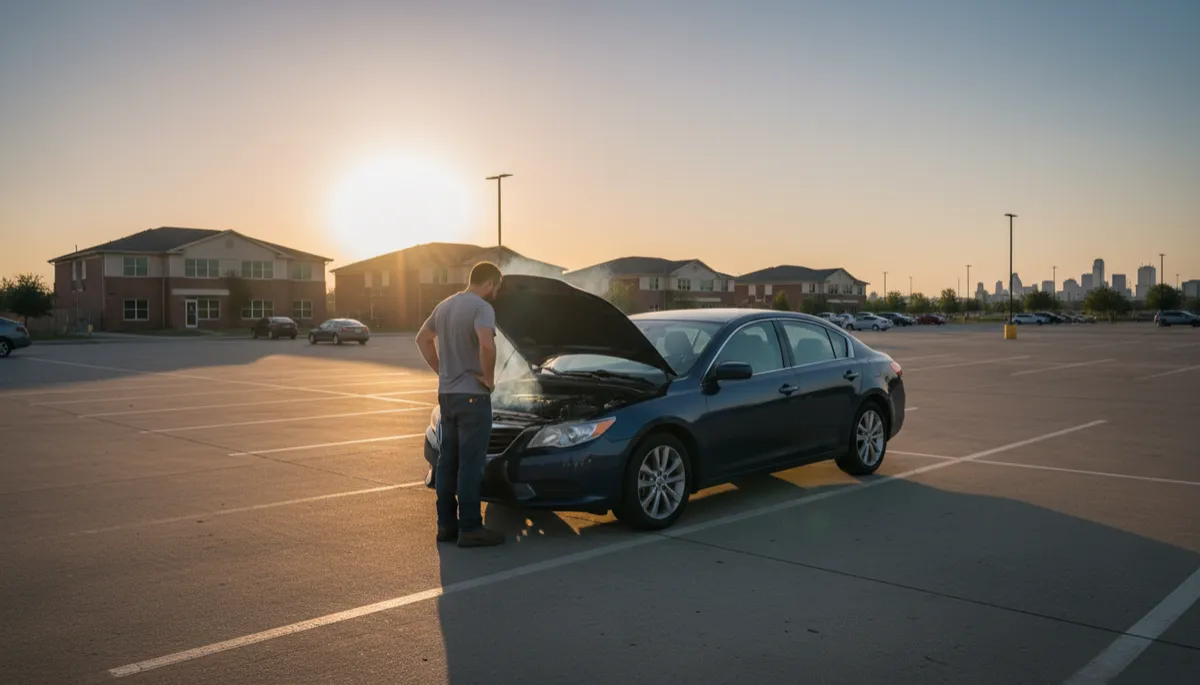
Most dead battery situations aren’t dramatic — they’re inconvenient. But they can turn risky fast if you’re on a busy roadway or stuck after dark. Knowing what’s really going on under the hood, and when to call for a professional jump start service, can save you time, money, and a lot of stress.
Why Car Batteries Die in the DFW Heat
People blame cold mornings for dead batteries, but in North Texas, heat is the real killer. A car battery is a chemical device. Inside are lead plates sitting in an acid solution. When DFW temperatures climb past 100°F — which happens regularly in our summers — that heat speeds up the chemical reactions and literally cooks the battery from the inside out.
Here’s what the Texas heat does to your battery:
- Evaporates battery fluid: High heat makes the electrolyte (battery fluid) evaporate faster. When the fluid level drops, the lead plates are exposed and start to corrode quickly.
- Accelerates plate corrosion: Corroded plates can’t hold a charge as well, so even if your alternator is working, the battery simply can’t store enough energy to crank the engine reliably.
- Speeds up sulfation: When a battery sits partially discharged — like during short trips with the A/C blasting — lead sulfate crystals build up on the plates. In Texas heat, this process speeds up and can become permanent damage.
Battery experts and roadside companies around DFW consistently see shorter lifespans here than in cooler climates. While 3–5 years is the standard industry expectation, in our extreme summers some batteries start failing closer to the 2–3 year mark if they’re not well maintained (as local roadside providers have noted in recent seasons). Parking in direct sun on hot pavement day after day just adds to the strain.
Another quirk of DFW weather: a battery can survive the summer, then die when temperatures finally drop in fall. The cooler air makes the engine harder to turn over, and the already damaged battery just can’t keep up. It feels like a sudden failure, but the heat did the damage months earlier.
Watch for these warning signs before you end up stranded with a dead battery in DFW:
- Slow cranking: The engine turns over sluggishly, especially first thing in the morning or after the car has sat all day at work.
- Dim or flickering lights: Headlights or interior lights seem weaker than usual, or brighten when you rev the engine.
- Electrical oddities: Power windows slow down, the radio cuts out when you use other accessories, or your A/C fan speed changes on its own.
- Dashboard battery warning: A battery or charging system light is your car telling you something’s wrong — don’t ignore it.
If your battery is more than three years old and you’re seeing any of these signs, getting it tested before peak summer or before a road trip around the Metroplex is a smart move.
What to Do When Your Battery Dies
When the car won’t start, your first job is to confirm it’s likely the battery — not something more serious like a starter or fuel problem — and to stay safe while you figure it out.
- Check your surroundings. If you’re on a shoulder or near traffic in Arlington or anywhere in DFW, turn on your hazard lights, stay inside the vehicle with your seatbelt on if traffic is close, and avoid standing in live lanes. In a parking lot or driveway, set the parking brake and pop the hood.
- Turn off electrical draws. Switch off A/C, radio, headlights, and any chargers. This reduces the load on a weak battery and helps during a jump start.
- Look and listen for battery clues. A single click or rapid clicking when you try to start usually points to a weak battery. Total silence can be battery, starter, or a connection issue. If the dash lights are dim or dead, that also leans toward the battery.
Quick Under-the-Hood Check
With the hood open and the engine off, inspect the battery area:
- Corrosion: White, blue, or green crust around the terminals can block current flow. This is common in cars that sit outside through DFW summers.
- Loose connections: Gently try to twist each cable end. They should be snug. If one moves easily, it may be your whole problem — but don’t overtighten or work on it with the ignition on.
Safe Jumper Cable Procedure (If You Have Help)
If a friend or good Samaritan with a good battery is available, and you’re parked in a safe, flat spot away from heavy traffic, you can attempt a jump. Follow this exact order to reduce risk, especially around flammable hydrogen gas released by batteries:
- Park the running vehicle close enough for cables to reach, but not touching. Both vehicles in Park (or Neutral with parking brake), ignitions off, headlights and accessories off.
- Connect red to dead: Attach the red (positive) clamp to the positive (+) terminal of the dead battery.
- Connect red to good: Attach the other red clamp to the positive (+) terminal of the good battery.
- Connect black to good: Attach the black (negative) clamp to the negative (–) terminal of the good battery.
- Connect black to metal on the dead car — NOT the dead battery: Clamp the remaining black cable to a clean, unpainted metal part of the dead vehicle’s engine or frame. This grounds the circuit away from the battery and lowers the chance of igniting hydrogen gas.
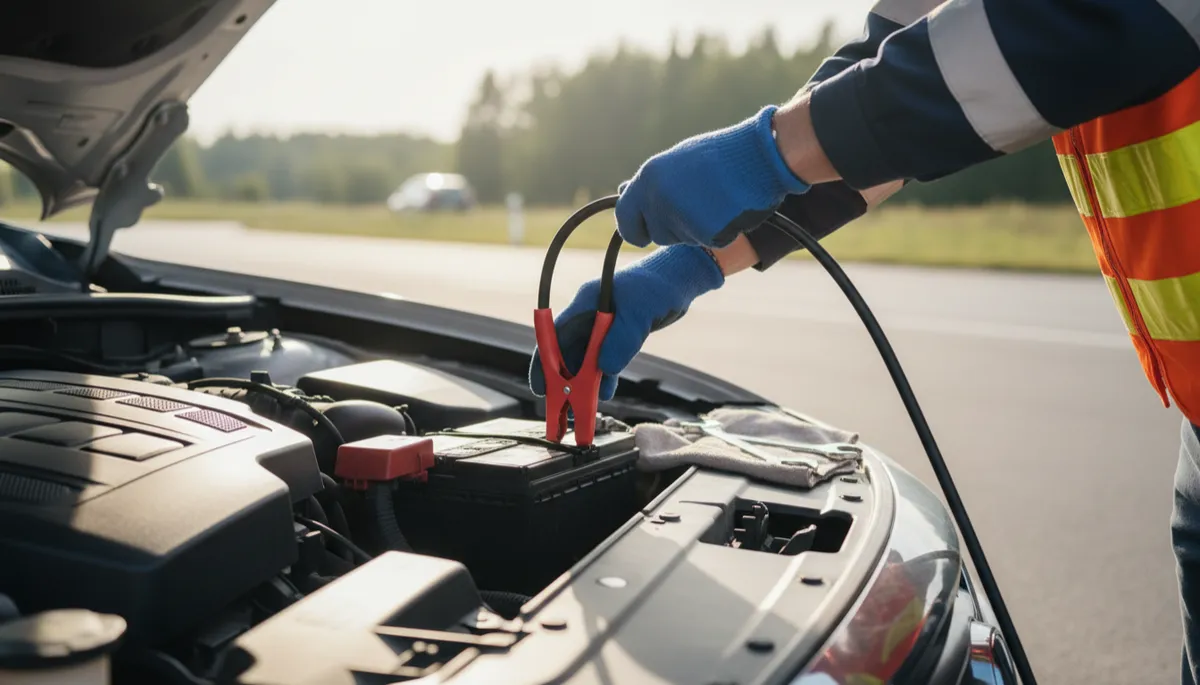
Proper cable order and solid connections make jump starts safer and more reliable.
- Start the good vehicle and let it run for a few minutes to feed some charge into the dead battery.
- Try starting the dead vehicle. If it cranks and starts, let both cars idle a few more minutes before disconnecting in the reverse order you connected them (black from metal, black from good battery, red from good battery, red from formerly dead battery).
After a successful jump, drive for at least 20–30 minutes without heavy electrical use if you can. If the car dies again soon, you’re likely dealing with more than a weak battery — often the alternator, which we’ll cover shortly.
When DIY Isn’t an Option — and Why That’s Common in DFW
The classic “flag someone down for a jump” doesn’t always work in real life, especially around the Metroplex. There are plenty of situations where a professional jump start service is the safer, smarter move:
- You don’t have jumper cables, or the people stopping to help don’t either.
- You’re stranded alone late at night in an unfamiliar part of Arlington or another DFW city and don’t feel comfortable asking random drivers for help.
- Your vehicle is newer and packed with electronics. Some late-model cars, hybrids, and EV-adjacent systems have specific jump points and procedures. A wrong move can fry sensitive modules.
- You’re stuck in a dangerous spot — like the shoulder of I‑30, I‑20, or Loop 820 — where standing outside with cables is a real risk due to fast-moving traffic.
- You already tried a jump and it didn’t hold. The car started, then died again a few minutes or miles later.
DFW traffic is heavy and fast, and shoulders can be narrow. Trying to position another vehicle nose‑to‑nose on the side of a major highway just to reach with jumper cables isn’t worth the risk. In those cases, calling a professional jump start service in Arlington, TX or anywhere in DFW is the better choice for your safety and your car’s electronics.
What a Professional Jump Start Service Actually Does
A good roadside technician isn’t just someone with jumper cables. They bring tools and experience that most drivers simply don’t have in the trunk. When you call a professional roadside assistance DFW service for a dead battery, here’s what typically happens:
- Industrial-grade jump packs: Instead of relying on another vehicle, they use a high-output, portable jump pack designed to deliver the right amount of power quickly and safely, even to larger trucks and SUVs.
- Battery load testing: With a battery tester, they can see whether your battery is simply discharged or if it’s failing internally. That helps you decide if you should drive straight to a shop for a replacement instead of risking another no-start in the same day.
- Alternator and charging system checks: Many roadside techs can quickly check alternator output. If the alternator isn’t charging properly, they’ll tell you that a jump is only a temporary fix and you shouldn’t stray far until it’s repaired.
- Connection and cable inspection: They’ll look for loose terminals, damaged cables, and obvious corrosion that might be the real cause of your trouble, not just a weak battery.
- Overall safety check: Before leaving, a reputable service will make sure your vehicle is at least safe enough to drive — checking for issues like severe belt squeal (which can hint at charging problems), warning lights, or anything that suggests you’d be better off with a tow than trying to limp home.
That’s the big advantage of using a professional jump start service instead of just getting a quick boost from a stranger: you’re not just getting your car started, you’re getting information about whether it’s likely to stay running.
Battery vs. Alternator — Know the Difference
Many drivers replace a battery, only to find themselves stranded again days later. The reason is simple: they fixed the symptom, not the cause. Understanding battery vs alternator can save you from buying parts you don’t need.
What the Battery Does
Your battery’s main job is to provide a big burst of power to crank the engine and run electronics when the engine is off. Once the engine is running, the alternator takes over as the main power source. The battery becomes more of a buffer and backup.
What the Alternator Does
The alternator is a small generator driven by your engine belt. It keeps the battery charged and powers everything electrical while you drive — headlights, A/C fan, power steering on some models, infotainment, and more. If the alternator fails, the battery has to run the whole car by itself, and it drains quickly.
Signs It’s the Alternator, Not Just the Battery
- The car starts after a jump but dies again within minutes or a few miles. That’s a classic sign the alternator isn’t recharging the battery while you drive.
- Flickering lights while driving: Headlights brighten and dim with engine speed, or the dash lights pulse or go dim at idle.
- Burning smell or whining noise: A failing alternator can overheat or seize, sometimes giving off a hot electrical or rubber smell, or a high-pitched whine.
- Battery or charging system warning light: Many cars have a battery icon or “ALT/GEN” light that comes on when the charging system isn’t working correctly.
When you call a professional jump start service in Arlington, TX, a good tech will help you sort out dead battery DFW problems from charging system failures. If they suspect the alternator, they’ll usually recommend heading straight to a repair shop or arranging a tow instead of driving around until the car quits again in a worse spot.
A Practical Way to Think About It
Here’s the simple rule of thumb:
- If your car struggles to start in the morning but then runs fine all day, the battery itself is the first suspect.
- If your car starts fine but then dies while driving or shortly after a jump, the alternator or charging system needs attention.
Understanding that difference helps you talk more clearly with any mechanic or roadside assistance DFW company you call, and helps you make better decisions about whether you just need a jump, a new battery, or a tow to a shop.
Closing Thoughts: Getting Back on the Road Safely
A dead battery always seems to pick the worst time — a late shift in Arlington, a hot afternoon in a DFW mall parking lot, or a quick stop on the way to pick up the kids. Knowing how the Texas heat wears batteries down, how to try a safe jump, and when to call for a professional jump start service puts you back in control of a frustrating situation. If you’re stranded in Arlington or anywhere in the Dallas–Fort Worth Metroplex and you’d rather have a knowledgeable local team handle it, Roadside Wrangler is available around the clock — nights, weekends, and holidays included — to help with jump starts, towing Arlington TX drivers trust, and other roadside needs so you can get home safely.
Roadside Wrangler – 24/7 Towing Service
3004 E Pioneer Pkwy, Arlington, TX 76010
(469) 212-4712
https://roadsidewranglertowing.com/
Open 24 hours.