Emergency Fuel Delivery in DFW: What to Do
Roadside Assistance, Emergency Fuel Delivery, DFW Metroplex
Ran Out of Gas in DFW? Here's What to Do and How Emergency Fuel Delivery Works
Stranded on the highway or an Arlington side street with the fuel gauge on empty is stressful, but you have more safe options than you might think—especially with emergency fuel delivery available across the DFW Metroplex.
When the Tank Runs Dry in DFW: What It Really Feels Like
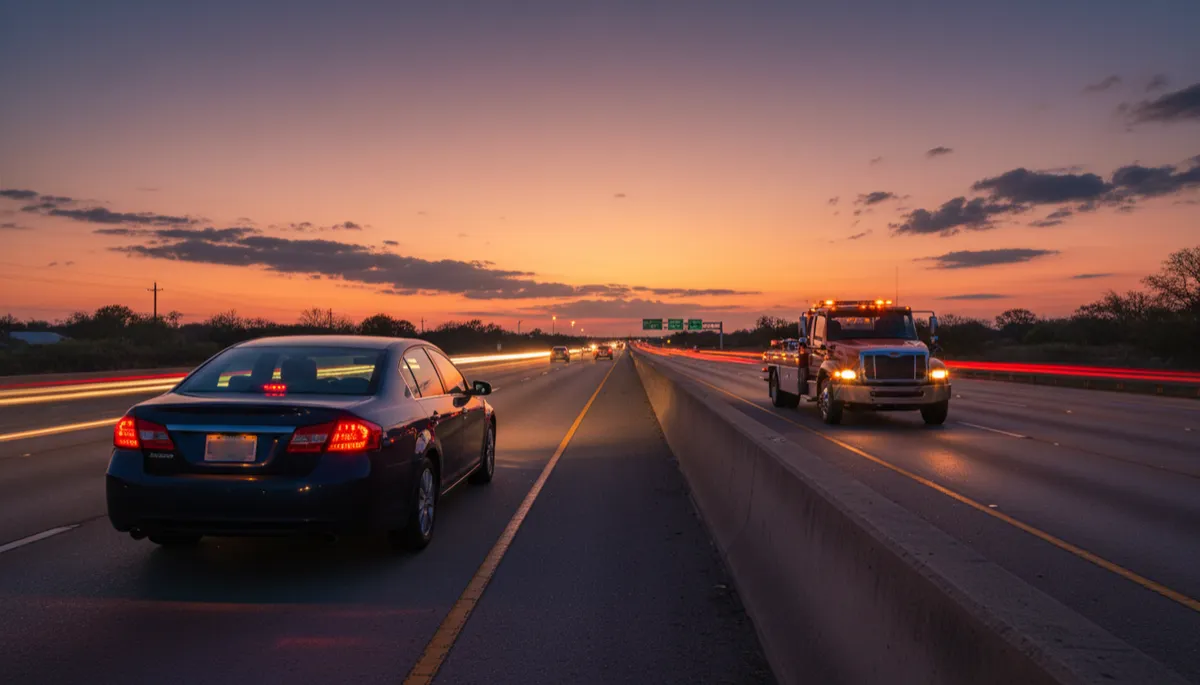
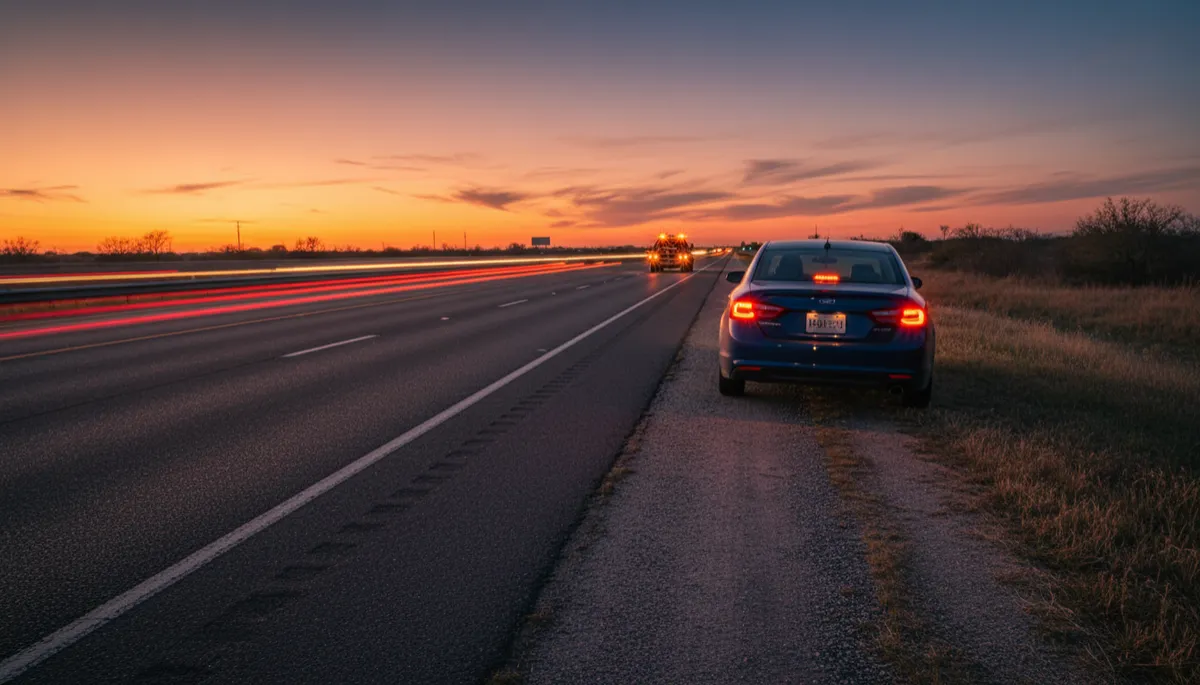
You’ve been watching that low-fuel light for a while, figuring you’ll make it to the next station on I-20 or along SH-360. Then the engine starts to sputter. The gas pedal feels mushy, the car loses power, and traffic is still flying past you at 70 miles an hour. Maybe you’re on I-30 near Arlington, a frontage road by the Parks Mall, or turning out of a parking lot in Grand Prairie—either way, the same thing happens: your car quietly dies and you coast to a stop.
In that moment, most people feel a mix of embarrassment, frustration, and a little fear. Your first instinct might be, “I’ll just walk to the nearest gas station, grab a can, and be done with it.” In a dense, walkable neighborhood that might work. On a DFW freeway or wide Arlington arterial, it can put you in real danger and make a bad situation worse.
The good news is that running out of gas is usually fixable right where you are. With roadside fuel delivery, a technician can bring fuel directly to your vehicle, get you restarted, and keep you out of traffic and out of the Texas heat.
Why Running Out of Gas Is More Dangerous Than It Looks
When your engine dies on a highway like I-30, I-20, SH-360, or Loop 12, you’re not just “out of gas”—you’re suddenly a slow or stopped obstacle in live traffic. Modern vehicles rely on engine power for both steering and braking assist, so when the engine cuts out, you lose:
- Power steering: The wheel becomes heavy and harder to turn, especially at low speeds or during lane changes to reach the shoulder.
- Power brakes: You still have brakes, but you may need to press much harder, and you have less margin for sudden stops.
On fast-moving DFW freeways, drivers behind you are not expecting a vehicle to slow rapidly or stop in their lane. That’s why the safest move is almost always to stay with your vehicle once you’ve gotten as far out of traffic as you can. The Texas Department of Transportation and AAA both recommend remaining in your car with your seatbelt fastened while you wait for help, especially on busy highways, because a vehicle offers more protection than standing on the shoulder in moving traffic.
Step-by-Step: What to Do the Moment You Run Out of Gas
Whether you ran out of gas in Arlington, TX or anywhere else in the Metroplex, this simple checklist will help you stay safe and get help on the way quickly.
- Coast to the right shoulder or a safe spot. As soon as the engine starts to stumble, signal right and gently steer toward the shoulder, an exit ramp, or a wide, well-lit side street. On DFW freeways, aim for the right shoulder rather than the left median whenever possible—it’s easier for roadside assistance to reach you there.
- Turn on your hazard lights. This makes you more visible to traffic and to any roadside assistance trucks. If you have reflective triangles or flares and it’s safe to step out briefly on the passenger side, you can place them behind your vehicle—but never walk close to high-speed traffic to do it.
- Decide whether to stay inside or exit—based on real conditions. On I-20, I-30, or Loop 12 with traffic rushing by, staying inside your vehicle with your seatbelt on is usually safest. If you’re on a quieter access road or parking lot and can move away from traffic to a sidewalk or grassy area, you may choose to step out—using the passenger-side doors if possible.
- Pin your location on your phone. Use your map app to drop a pin or note the nearest exit number, mile marker, or cross street. Tools like 511DFW and DriveTexas.org show real-time highway information, but your roadside provider mainly needs your exact location and direction of travel.
- Call for roadside fuel delivery. Search for “fuel delivery service near me” or “emergency fuel delivery DFW”, or call a trusted local provider directly. Explain that you are stranded on highway DFW or at a specific Arlington intersection and need fuel brought to you.
Why Walking to a Gas Station Is Usually a Bad Idea in DFW
The classic movie scene is someone walking down the shoulder with a red gas can. In reality, that’s one of the riskiest choices you can make on a major DFW roadway. Here’s why staying put and calling roadside fuel delivery is almost always smarter:
- Distances are longer than they look. That gas station sign you saw on I-35W or I-20 might still be a couple of miles away, and walking along a highway shoulder or crossing on-ramps is extremely dangerous.
- Texas heat is no joke. In DFW summers, temperatures often push past 100°F. Walking in direct sun along concrete and asphalt, possibly in work clothes or sandals, can lead to heat exhaustion before you realize it—especially if you weren’t carrying water.
- Traffic isn’t expecting pedestrians. Drivers on highways and busy arterials like Cooper, Collins, or Pioneer Parkway are not scanning for people on foot. Being struck while walking with a gas can is a very real risk.
Waiting in your vehicle for a professional to bring fuel may feel slower, but it keeps you out of high-speed traffic and out of the worst of the heat. With multiple emergency fuel delivery DFW providers operating 24/7, help is usually closer than you think, especially in populated areas like Arlington, Grand Prairie, and the mid-cities.
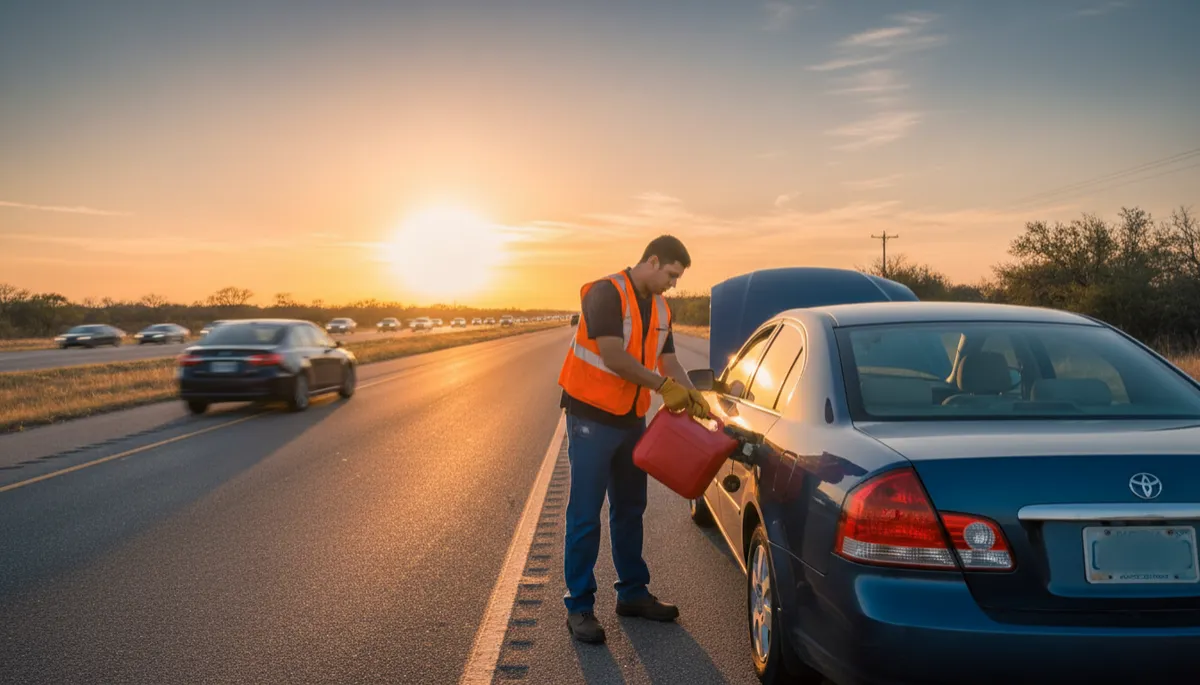
Professional roadside fuel delivery keeps you out of traffic and Texas heat while your vehicle is safely refueled.
How Emergency Fuel Delivery Works, Step by Step
When you call a fuel delivery service near me, the process is pretty straightforward. Knowing what to expect can make the whole situation feel less stressful.
- You call and explain that you’re out of gas. Tell the dispatcher that you’ve ran out of gas in Arlington, TX (or wherever you are in DFW) and need roadside fuel delivery, not a tow—unless your vehicle is in a dangerous spot and must be moved immediately.
- You share your exact location. Be as specific as possible: “I-20 westbound, just past Collins, on the right shoulder” or “3000 block of E Pioneer Pkwy near New York Ave, Arlington”. Mile markers, exit numbers, nearby landmarks, and GPS pins all help the driver find you faster.
- You confirm your vehicle and fuel type. The dispatcher will usually ask for:
- Vehicle make, model, and color
- Gasoline or diesel
- Regular, mid-grade, or premium if your car specifically requires it
- A roadside technician heads your way. They’ll bring the correct type of fuel—typically enough to get you comfortably to the next station, not to fill the tank completely. Many DFW providers operate 24/7 and aim for response times in the 20–40 minute range in populated areas, though timing always depends on traffic and distance.
- Fuel is added and your engine is restarted. Once the technician arrives, they’ll safely add fuel, help you start the vehicle, and may have you let it idle for a few moments. If your car doesn’t restart, they can help determine whether you need a tow instead.
Throughout the process, your job is simple: stay as safe and visible as possible, follow the dispatcher’s instructions, and wait where you and your vehicle are protected from traffic.
A Quick Note on Fuel Type Mistakes
Running out of gas is one thing. Putting the wrong fuel in your vehicle is another. If you accidentally put diesel in a gasoline car, or gasoline into a diesel truck, that’s not a simple top-off fix—it’s a separate emergency that can cause serious engine damage if you keep driving or try to start the engine repeatedly.
If you realize you’ve misfueled:
- Do not start or restart the engine. The less the wrong fuel circulates, the better your chances of avoiding major damage.
- Call for professional help immediately. You’ll likely need a tow to a shop that can safely drain and flush the system. This is different from normal roadside fuel delivery, so be very clear with the dispatcher about what happened.
Simple Ways to Avoid Running Out of Gas in DFW
Everyone gets busy and pushes the fuel gauge a little too far now and then, but a few small habits can dramatically reduce your chances of ending up out of gas on the highway around DFW.
- Refuel at a quarter tank. Make it your personal rule: once you drop below 1/4 tank, you’re “on empty” in your mind. This is especially important before long stretches on I-35W, I-20, or rural routes where gas stations can be more spread out than in central Arlington or Dallas.
- Use your vehicle’s fuel alerts. Many newer vehicles let you customize low-fuel warnings. Set them earlier than the default so you have time to plan a stop instead of hunting for a station in unfamiliar parts of the Metroplex.
- Factor in Texas heat and AC use. In DFW summers, heavy air-conditioner use and stop-and-go traffic can increase fuel consumption. If you’re stuck in congestion on I-30 or Loop 820 with the AC blasting, don’t assume your “miles to empty” estimate will be perfect—it’s just a computer’s best guess.
- Check fuel before long detours or construction zones. With ongoing construction across the Metroplex, you may find yourself rerouted or sitting longer than expected. A quick glance at your gauge before you enter a known work zone can save you a lot of stress later.
When You’re Stranded, Having a Local Roadside Partner Matters
Running out of gas is frustrating, but it doesn’t have to turn into a long, stressful ordeal. Staying with your vehicle, making yourself visible, and calling a trusted local provider for emergency fuel delivery DFW can turn a bad moment into a minor delay. Whether you’re on I-20, an Arlington side street, or in a parking lot after a late shift, professional help means you’re not dealing with traffic and the Texas heat on your own.
Roadside Wrangler is based right here in Arlington and understands the real-world conditions DFW drivers face every day—fast freeways, busy frontage roads, construction zones, and long summer days. If you find yourself out of gas, need a tow, or just want a calm, experienced voice to walk you through your options, our team is ready to help 24/7 across the Metroplex with straightforward, professional service.
Roadside Wrangler – 24/7 Towing Service | 3004 E Pioneer Pkwy, Arlington, TX 76010 | (469) 212-4712 | https://roadsidewranglertowing.com/ | Open 24 hours.