Flatbed vs. Wheel-Lift Towing: Which Method Is Right for Your Vehicle?
Towing, Roadside Assistance, Arlington TX, DFW Metroplex
Flatbed vs. Wheel-Lift Towing: Which Method Is Right for Your Vehicle?
Stuck on a DFW highway and waiting on a tow truck? Here’s how to tell whether flatbed or wheel-lift towing is safest for your specific vehicle.
Stranded on a DFW Highway: Does the Tow Method Really Matter?
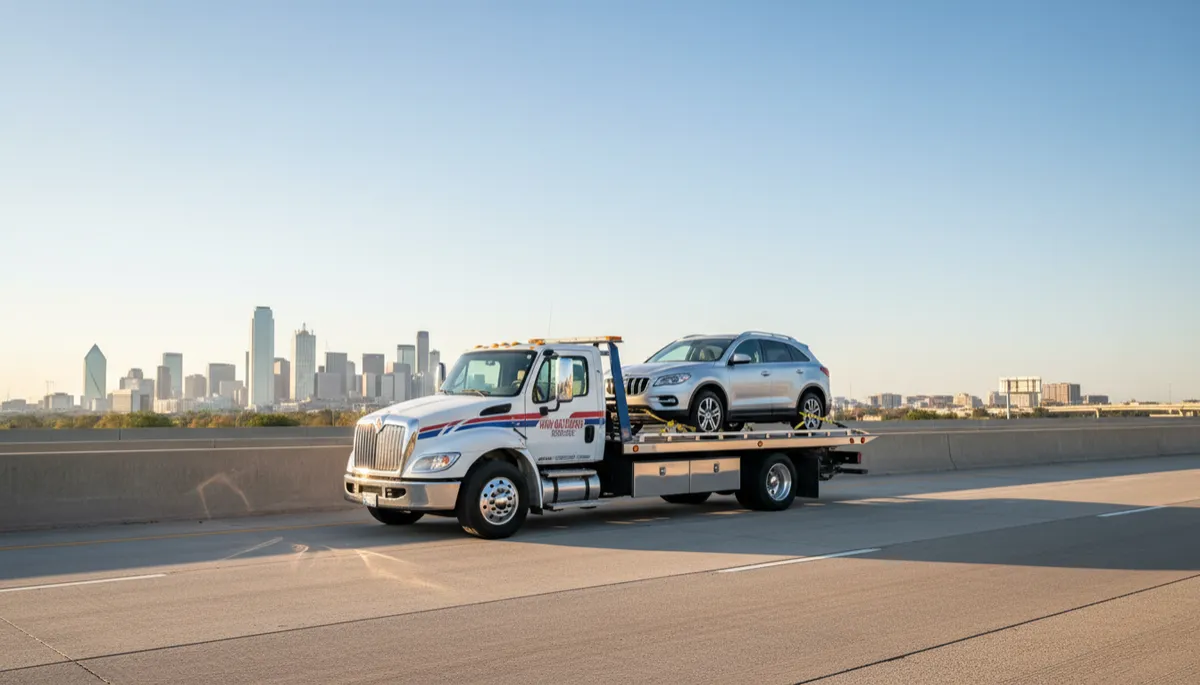
Picture this: you’re on I-20, LBJ Freeway, or 360 in Arlington. The engine dies, traffic is flying past, and you’ve done the right thing—pulled to the shoulder and called for towing Arlington TX drivers rely on. A truck is finally weaving through traffic toward you. In those few seconds you might notice: is it a flatbed tow truck, or a traditional wheel-lift rig? And does that detail actually matter, as long as you get off the highway?
It does matter. Choosing the wrong method for your specific vehicle can stress the transmission, transfer case, driveshafts, suspension, or even the battery system on an electric car. The damage doesn’t always show up right away, but it can turn a simple breakdown into a very expensive repair later. The good news is that a professional towing service DFW drivers trust will match the tow method to your vehicle—if they have the right information and equipment.
What Is Flatbed Towing?
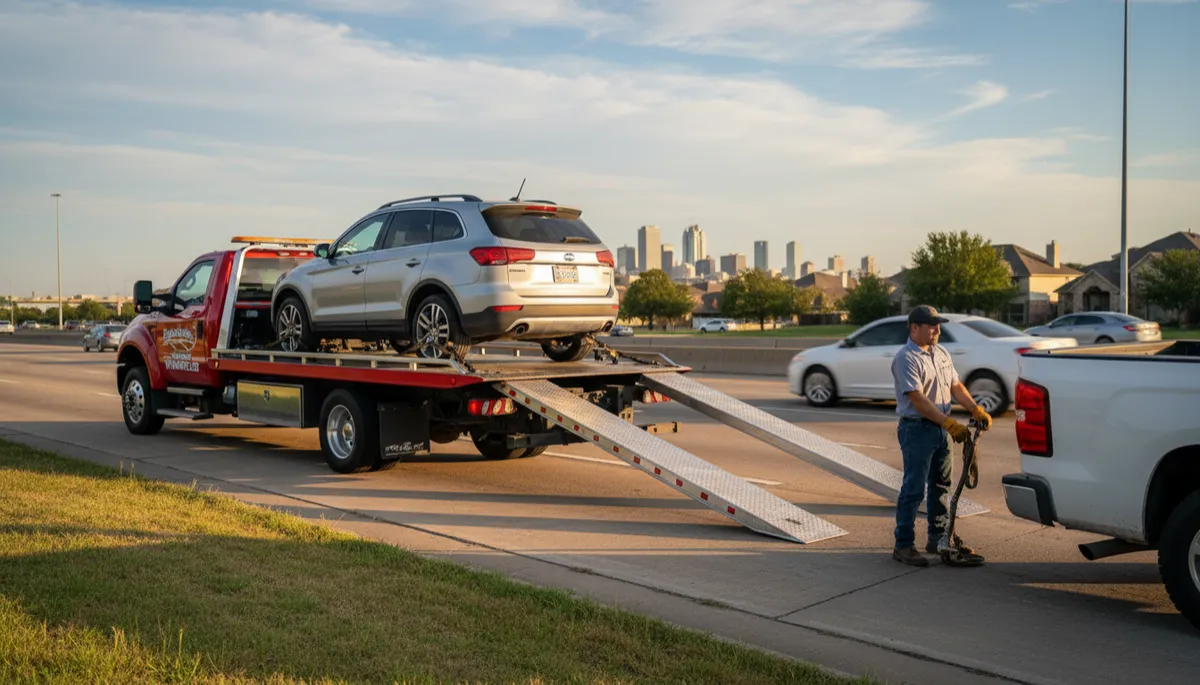
Flatbed towing means your entire vehicle rides on a long, flat metal deck. The operator tilts the bed, lowers it to the ground, and then either drives your vehicle up under its own power or winches it on if it won’t start. Once it’s positioned correctly, the bed is leveled again and your car is secured with straps or chains at all four corners. All four wheels are completely off the ground for the whole trip, and no part of the drivetrain turns while you’re being transported.
Because your vehicle is essentially riding on a platform, flatbed towing DFW drivers request is considered the gold standard for most situations. There’s no extra mileage added to your odometer, no tire wear, and very little risk of damage from potholes or road debris. For many modern vehicles—especially AWD, 4WD, and electric—flatbed isn’t just “nice to have,” it’s the method their manufacturers recommend or require in the owner’s manual.
What Is Wheel-Lift Towing?
Wheel-lift towing is the modern evolution of the old hook-and-chain truck. Instead of hooking onto your bumper or frame, a metal yoke slides under either the front or rear wheels. Hydraulics lift those two wheels off the ground, while the other axle’s wheels stay on the pavement and roll during the tow. The vehicle is secured with straps and safety chains, and then towed with two wheels up, two wheels down.
Wheel-lift towing is faster to set up and more maneuverable in tight spaces like crowded parking lots, narrow streets, or apartment complexes. That makes it useful for quick, short moves when the vehicle type allows it. But because one axle is still turning, wheel-lift towing is not appropriate for every drivetrain. Used on the wrong vehicle, it can overwork internal components that were never meant to spin without proper lubrication or power management.
Which Vehicles Need a Flatbed Tow?
Some vehicles are simply not good candidates for wheel-lift towing. If you drive any of the following in the DFW Metroplex, you should assume a flatbed tow truck is the safest option and mention that when you call for roadside assistance Arlington drivers depend on.
All-Wheel Drive (AWD) and 4WD Vehicles
Many trucks, crossovers, and SUVs sold in North Texas are AWD or 4WD. On these vehicles, power can be sent to all four wheels through a transfer case and multiple driveshafts. If you lift only two wheels and let the others roll on the pavement, you can force parts inside that transfer case to spin without proper lubrication. Over a few miles, that can create heat and wear that leads to failure later—an expensive repair that could have been avoided with flatbed AWD towing or 4WD towing instead.
Rear-Wheel-Drive Cars and Trucks
Rear-wheel-drive vehicles can sometimes be wheel-lifted safely, but only when the drive wheels are off the ground and the transmission is properly set (or a driveshaft is disconnected). If the rear wheels are left on the ground and the driveshaft turns with the engine off, you risk starving the transmission or differential of lubrication. Using a flatbed eliminates that risk entirely, which is why many operators default to flatbed for RWD vehicles, especially for longer distances.
Low-Clearance, Lowered, Luxury, and Exotic Vehicles
Sports cars, lowered sedans, and high-end luxury or exotic vehicles often have low front bumpers, side skirts, or long overhangs. Trying to lift them from one end with a wheel-lift can scrape bodywork, damage undercarriage panels, or stress suspension components. Even driving them up onto a flatbed sometimes requires extra ramps or wood blocks to reduce the angle. For these vehicles, a properly equipped flatbed towing DFW service is less about convenience and more about protecting a serious investment.
Electric Vehicles (EVs) and Hybrids
Most EV manufacturers explicitly recommend or require flatbed towing. The reason is simple: the electric motors are often directly coupled to the wheels. If those wheels turn while the car is off, the motors can act like generators, sending power back into sensitive electronics such as the inverter or battery management system. That’s not how these systems are designed to operate, and it can cause expensive damage. If you drive an EV in Arlington or anywhere in DFW, assume flatbed only unless your owner’s manual clearly says otherwise.
Motorcycles and Specialty Vehicles
Motorcycles should never be wheel-lifted by the frame or handlebars. They require a flatbed or specialized motorcycle carrier with proper tie-down points and wheel chocks. The same goes for small specialty vehicles like golf carts or side-by-sides; they need secure, level transport rather than being dragged on two wheels.
Accident-Damaged or Non-Rolling Vehicles
If your vehicle has been in a crash—especially if airbags deployed, wheels are bent, or suspension and steering are visibly damaged—a responsible operator will insist on a flatbed. Trying wheel-lift towing on a car that won’t roll straight or has loose components can cause more damage or even make it unsafe on the road. Flatbed allows the operator to winch a non-rolling vehicle onto the deck and secure it firmly for transport.
Long-Distance Tows
For longer trips across the Metroplex or out of town, flatbed towing avoids unnecessary tire wear, alignment issues, and drivetrain stress. Over 30, 50, or 100 miles, those extra rotations add up. If you already know the tow will be more than just a few miles, asking for a flatbed up front is usually the smarter choice, regardless of drivetrain.
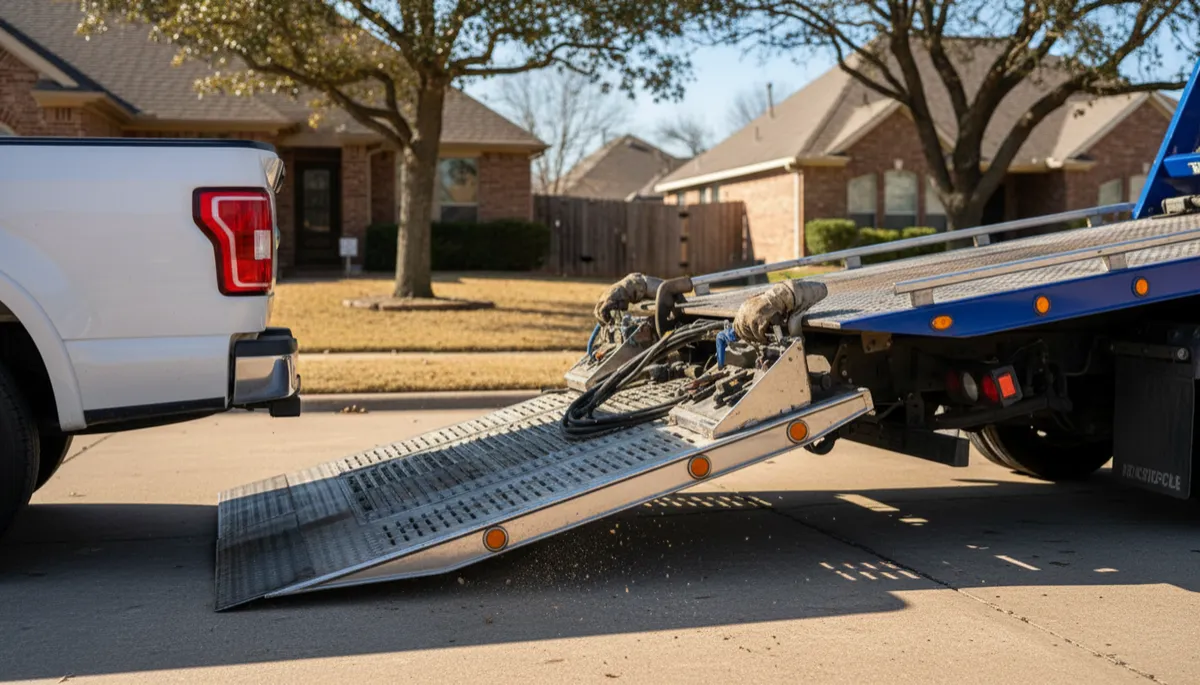
A careful flatbed setup protects your suspension, drivetrain, and bodywork from avoidable damage.
When Wheel-Lift Towing Works Just Fine
Wheel-lift towing has its place. For standard front-wheel-drive sedans and compact SUVs, being moved a short distance by a trained operator, wheel-lift is often perfectly safe. Examples include pulling a disabled car out of a tight parallel parking spot, relocating a vehicle across a lot, or towing a few miles to a nearby shop when flatbed isn’t necessary or immediately available.
The key word is correctly. The operator must lift the non-drive wheels, secure the steering, verify the transmission is in the proper position, and use safety chains and lights as required by Texas regulations. Licensed operators in Texas are overseen by the Texas Department of Licensing and Regulation, which sets equipment and safety standards for tow trucks statewide. When wheel-lift towing is done by someone who knows the vehicle’s drivetrain and follows those rules, it can be a fast, efficient solution.
DFW-Specific Factors That Affect Tow Choices
The Dallas–Fort Worth area adds a few wrinkles to the flatbed vs. wheel-lift decision. Our highway system mixes high-speed interstates with long frontage roads, short on-ramps, and steep exit ramps. Getting a disabled vehicle safely off I-20 or LBJ and onto a side road often means navigating tight shoulders, guardrails, and uneven pavement—conditions where a stable flatbed can be a real advantage, especially with heavier trucks and SUVs common in North Texas.
Then there’s the heat. In a DFW summer, pavement temperatures can climb far above the air temperature. A stranded vehicle with softening tires, leaking fluids, or a compromised cooling system can deteriorate quickly. Getting the entire vehicle up on a flatbed minimizes further tire and drivetrain stress in that extreme heat. This is one reason many towing service DFW fleets keep multiple flatbeds on the road at all times, especially during peak breakdown seasons.
Also, consider the local vehicle mix. North Texas buyers love trucks, crossovers, and SUVs, and many of those are AWD or 4WD. That means, in practice, flatbed is the default safe choice for a large share of calls around Arlington and the wider Metroplex. If your vehicle has been in a collision, airbags have deployed, or you suspect steering or wheel damage, any responsible operator in this region will avoid wheel-lift and recommend a flatbed instead, even for short distances.
What to Tell the Dispatcher When You Call for a Tow
You don’t need to be a towing expert to get the right truck sent your way. You just need to share a few key details when you call for help. That information lets the dispatcher decide between flatbed towing DFW operators use for sensitive vehicles and wheel-lift towing for simple, short moves.
- Make and model: “2021 Toyota RAV4,” “2018 F-150,” “Tesla Model 3,” etc. This often tells us right away if it’s AWD, 4WD, or EV.
- Drivetrain, if you know it: Front-wheel drive, rear-wheel drive, AWD, or 4WD. If you’re not sure, say that; a good dispatcher will ask follow-up questions.
- What happened: Mechanical breakdown, flat tire, overheating, no-start, or accident. Mention specifically if airbags deployed or if the wheels look bent or pushed back.
- Where you are and where you’re going: On a shoulder, in a parking garage, in a driveway, and whether the destination is nearby or across the Metroplex.
A professional towing Arlington TX company will use this information to dispatch the right equipment the first time, so you’re not stuck waiting on the side of 360 for a second truck. If you have a strong preference—like always wanting a flatbed for your AWD or luxury vehicle—say that clearly when you call. A reputable operator will either honor that request or explain honestly if another method is safe and appropriate for your situation.
A Practical Way to Decide While You Wait
Standing on the shoulder with hazard lights blinking is never fun. While you wait, a simple rule of thumb can help you feel more confident about the kind of truck you want to see pulling up:
- If it’s AWD, 4WD, EV, luxury, low, or damaged: Flatbed is the safest choice.
- If it’s a basic 2WD car and the tow is very short: Properly done wheel-lift towing can be fine.
From there, it’s the driver’s job to choose the safest way to load, secure, and transport your vehicle within Texas regulations. Your job is simply to share accurate information, ask questions if something doesn’t look right, and work with a company that treats your car like it was their own.
Getting Help from a Local Team That Uses Both Methods the Right Way
When you’re broken down on a DFW highway or stuck in a parking lot in Arlington, you don’t want to debate towing theory—you just want to know your vehicle will be moved safely and quickly. That’s where working with a local, experienced team makes a real difference. Roadside Wrangler runs a fleet that includes modern flatbed trucks for AWD towing, 4WD towing, EVs, motorcycles, and damaged vehicles, along with wheel-lift units for quick, short-distance moves where they’re appropriate. They serve the entire DFW Metroplex around the clock, so whether you’re on 820 at midnight or in a neighborhood off Pioneer Parkway at noon, someone can be dispatched to you any time you call.
If you remember nothing else while you’re waiting on the shoulder, remember this: mention your vehicle type, say if it’s AWD, 4WD, or electric, and don’t hesitate to ask for a flatbed if you’re unsure. A good towing service DFW drivers trust will walk you through the options and send the right truck for the job, so this breakdown stays a minor hassle—not the start of a bigger repair bill later.
Roadside Wrangler – 24/7 Towing Service | 3004 E Pioneer Pkwy, Arlington, TX 76010 | (469) 212-4712 | https://roadsidewranglertowing.com/ | Open 24 hours.