Junk Car & Salvage Transport in DFW: A Guide
Towing, Junk Car Transport, Salvage Vehicle, Arlington TX, DFW
Junk Car & Salvage Vehicle Transport in DFW: What You Need to Know
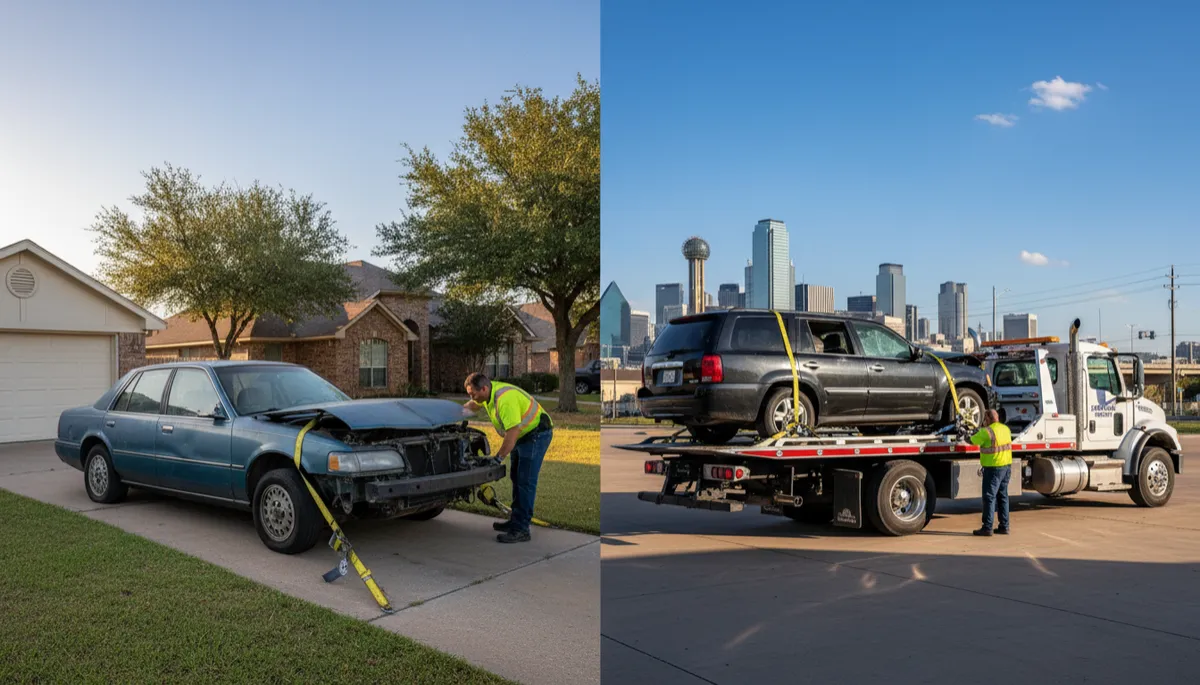
A clear, step‑by‑step guide for DFW drivers dealing with a dead, wrecked, or totaled vehicle and trying to move it safely and legally.
That Dead Car in the Texas Heat Isn’t Going Anywhere
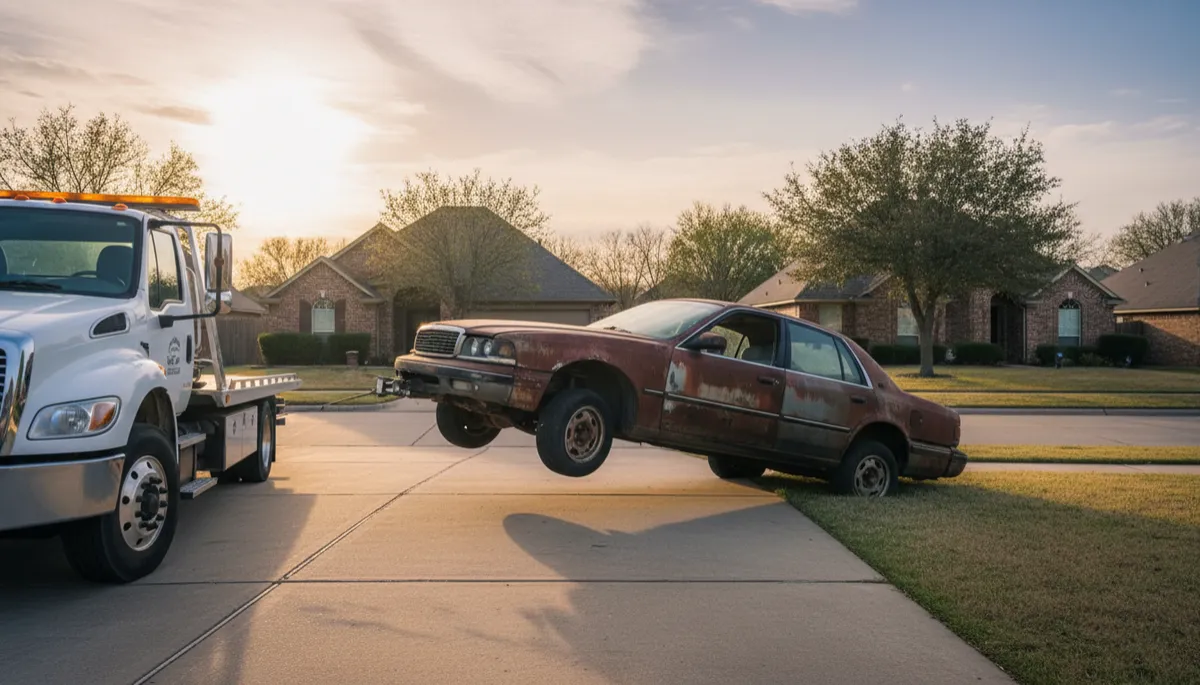
Maybe it was totaled on I‑20, flooded in a North Texas storm, or the engine finally gave up in your Arlington driveway. Now it just sits there: flat tires, leaking fluids, baking in 100‑degree DFW heat. It’s not safe to drive, it won’t start, and every day it takes up more space and draws more attention from neighbors, HOAs, or even code enforcement.
You know it needs to go — to a salvage yard, a buyer, a charity, or a storage lot — but non-running car towing feels complicated. How do you move something that doesn’t roll, doesn’t steer well, or is half‑crushed? Who do you call? What paperwork do you need? And how do you do it without making a bad situation worse on I‑30 or I‑35W?
What Junk or Salvage Vehicle Transport Really Is
Junk vehicle or salvage vehicle transport is specialized towing for cars and trucks that can’t safely move under their own power. These are vehicles that are wrecked, flooded, burned, stripped, or so badly damaged that a normal hook‑and‑tow setup is risky or impossible. For this kind of job, a professional service uses:
- Flatbed tow trucks that carry the entire vehicle on the bed, keeping damaged wheels, leaking fluids, or loose panels off the road (ideal for flatbed towing junk car situations).
- Specialized rigging — heavy‑duty winches, chains, and straps — to pull vehicles that won’t roll, have missing wheels, or are stuck in mud, grass, or gravel.
- Operators trained to deal with sharp metal, leaking fluids, and unstable frames without creating a hazard on Arlington streets or DFW freeways.
Standard towing — the wheel‑lift you might see for a simple breakdown — assumes the vehicle can at least roll and steer. With salvage vehicle towing Arlington TX, the assumption is the opposite: the car may be locked up, missing parts, or not structurally sound. The gear and approach are different from the start.
Common Situations That Call for Junk or Salvage Transport
If you’re not sure whether you need regular towing or true salvage transport, these scenarios almost always require a flatbed and specialized handling:
- Totaled after a crash – The frame is bent, airbags deployed, wheels knocked sideways, or the body is crushed. This is classic totaled car towing DFW territory, especially after high‑speed incidents on I‑20 or Loop 820.
- Engine or transmission failure – The vehicle won’t start or move, even in neutral, or the drivetrain is locked. Pushing it down the driveway isn’t realistic or safe, so you need non-running car towing.
- Flood damage – After heavy storms or flash flooding along the Trinity River or low‑lying Fort Worth streets, water‑logged vehicles may be unsafe to start and can short out or catch fire if you try. They should be winched and carried, not driven.
- Fire damage – Burned wiring, melted plastics, and weakened structural parts make the vehicle unstable. A flatbed is the safest way to move it to a salvage yard or insurance inspection site.
- Long‑abandoned vehicles – Cars that have sat for months or years in a driveway, alley, or back lot in Arlington, Grand Prairie, or Mansfield often have seized brakes, dry‑rotted tires, and rusted components. They may now qualify as “junked vehicles” under Texas Transportation Code, which local authorities can order removed if visible from public property.
- Vehicles being sold to junkyards or auto salvage yards – When you sell to a recycler or dismantler, you still need to get the vehicle there. That’s where junk vehicle removal Arlington services come in, especially if the buyer doesn’t provide pickup or you prefer a neutral transporter.
- Donation and estate vehicles – Non‑running cars donated to charity or inherited through an estate often need to be moved from homes in Arlington, Irving, or Fort Worth to auctions, storage facilities, or nonprofit partners.
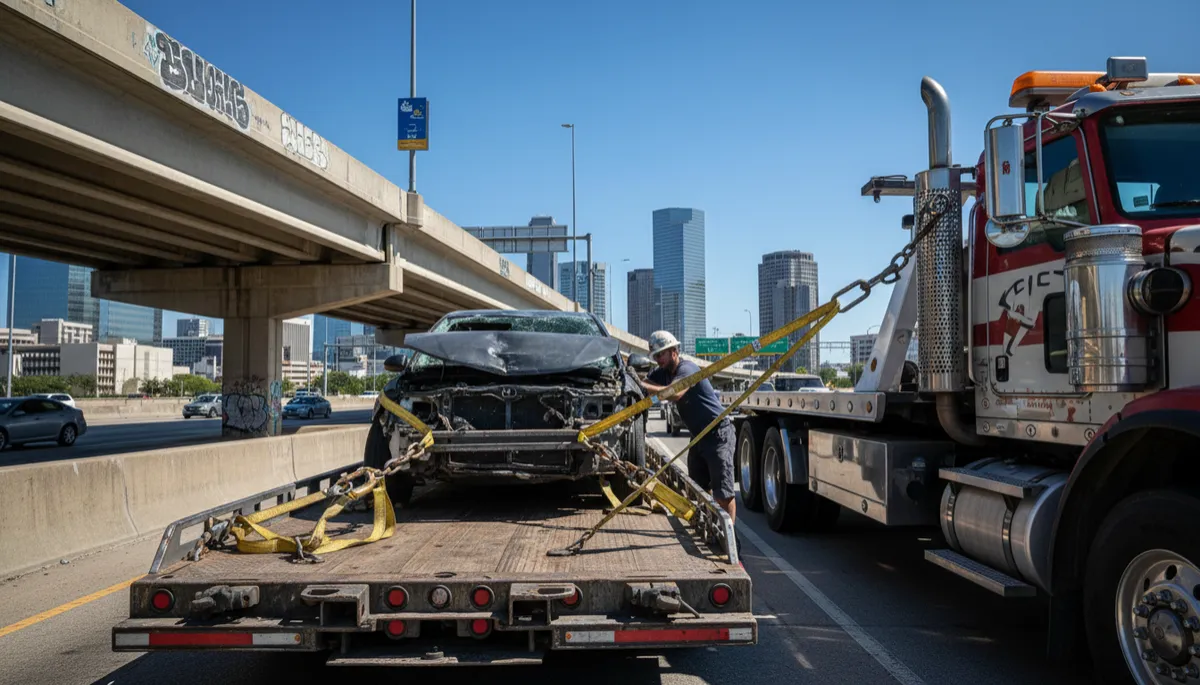
Proper strapping and flatbed loading keep damaged salvage vehicles stable in heavy DFW traffic.
What the Junk or Salvage Transport Process Looks Like
When you call a professional service like Roadside Wrangler for salvage vehicle towing Arlington TX, you should know exactly what will happen. A straightforward process usually looks like this:
- Initial questions and basic inspection – Over the phone, you’ll be asked where the car is, what happened to it, and whether it rolls, steers, or has keys. When the truck arrives, the operator will visually confirm the condition and decide the safest way to load it.
- Confirm it can’t be safely wheel‑lifted – For true junk or totaled car towing DFW jobs, a wheel‑lift is often ruled out because of damage, missing wheels, or fluid leaks. The operator will typically go straight to a flatbed setup to keep the entire vehicle off the ground.
- Dispatch and positioning of a flatbed – The driver positions the truck to line up with your driveway, parking spot, or lot. In tight Arlington neighborhoods or busy Fort Worth streets, this can take a bit of maneuvering to stay clear of traffic and property.
- Winching and securing the vehicle – Using a winch, chains, and heavy‑duty straps, the operator pulls the vehicle onto the bed. Wheels are chocked if needed, and the car is tied down at multiple points. This is important not just for safety but also to comply with Texas requirements that loads be secure and not shed parts or debris on the road.
- Transport to your chosen destination – The key difference with a neutral towing company is that you decide where it goes: a salvage yard, mechanic, storage lot, new buyer, or charity. For example, scrap car towing Fort Worth might take your vehicle from an Arlington apartment complex to a Fort Worth recycler of your choice.
Paperwork and Texas Title Rules You Should Know
For most junk car transport DFW jobs, towing companies don’t buy the vehicle — they just move it. That means you usually stay the legal owner until you sell, scrap, or donate it. To avoid headaches, it helps to have:
- Texas title (or branded salvage/non‑repairable title) – Ideally in your name. If the vehicle has already been branded salvage or non‑repairable, that will appear on the title and affects whether it can ever be driven again, per Texas DMV salvage guidelines.
- Bonded title, if needed – If you don’t have a regular title, Texas allows a bonded title process in some cases. This is handled through the county tax office and the TxDMV; it’s separate from towing, but you may need it if you’re transferring the vehicle to a buyer who requires clear ownership.
- Your ID – A valid driver’s license or state ID to show you’re authorized to move the vehicle from the property or release it to a yard, buyer, or charity.
- Lien release paperwork – If there was ever a loan on the vehicle, have payoff or lien release documentation ready. Many salvage yards and buyers in Texas will ask for this before they take ownership, to avoid title issues under state regulations that now require more rigorous reporting from recyclers.
Local governments in Texas can declare visible junked vehicles a public nuisance and order them removed, with titles canceled as part of that process. Arranging removal on your own terms — with your paperwork in order — keeps you in control instead of reacting to a notice on the windshield.
Why DFW Traffic and Texas Heat Make Timing Important
Moving a dead or totaled vehicle in North Texas isn’t just about finding a truck — it’s about when that truck shows up and how quickly the job gets done. The DFW Metroplex is shaped by a few realities:
- Heavy freeway traffic – I‑30, I‑20, I‑35W, and 360 see constant congestion, especially during rush hours and construction. A stalled or wrecked vehicle sitting on the shoulder or an on‑ramp is a serious hazard. Fast, well‑timed dispatch matters for everyone’s safety.
- Metro‑wide service area – A good provider covers Arlington, Fort Worth, Grand Prairie, Mansfield, Irving, and surrounding cities. That means coordinating routes so a truck can reach you quickly, whether you’re at a home in south Arlington or a lot near downtown Fort Worth.
- Texas summer heat – In 100‑plus‑degree weather, vehicles deteriorate faster. Fluids evaporate, plastic and rubber crack, batteries leak, and interiors grow mold, especially in flood‑damaged cars. The longer a junk vehicle sits, the worse its condition — and the more likely it is to attract complaints or qualify as a nuisance.
Having access to 24/7 towing Arlington TX means you can move that problem car at a time that works — early morning before traffic builds, late at night after work, or right after an accident when you’re still on the roadside and need it gone quickly.
Junk Transport vs. Scrap or Donation Pickup: What’s the Difference?
Many junk car buyers and some charities in DFW advertise “free pickup.” In those cases, the buyer or nonprofit usually sends their truck, on their schedule, to take the vehicle directly into their inventory. That can work well, but there are trade‑offs:
- The destination is fixed — to their yard or partner, not necessarily where you’d prefer the vehicle to go.
- Scheduling may be slower, especially during busy times or if you’re outside their core service area.
- You may have less flexibility if a sale falls through or you change your mind about the buyer or charity.
With a neutral towing company like Roadside Wrangler, junk car transport DFW is focused on one thing: moving the vehicle safely and legally to the destination you choose. If you’re comparing offers from multiple salvage yards, want to send a car from Arlington to a specific scrap car towing Fort Worth facility, or need to deliver a donation to a particular charity, independent transport gives you that control.
How to Prepare Your Vehicle for Junk or Salvage Transport
A few simple steps before the truck arrives can save time, prevent disputes, and protect your personal information:
- Remove personal items – Check the glove box, center console, trunk, door pockets, and under seats. Once the vehicle is at a salvage yard or buyer, getting items back can be difficult or impossible.
- Gather keys and remotes – Even if the car doesn’t run, keys help with steering, unlocking, and sometimes shifting into neutral for loading. If you truly don’t have keys, let the towing company know ahead of time so they can plan for it.
- Note existing damage – Take clear photos of all sides of the vehicle, plus any major damage, before loading. This protects both you and the towing company if questions come up later about scrapes or dents.
- Have your title and ID ready – Keep them in a safe place until you’re ready to sign anything. If the vehicle is going straight to a buyer or yard, you may complete paperwork at pickup or at the destination, depending on the arrangement.
- Clear access for the flatbed – Move other vehicles, trailers, or trash cans so the truck can back up and line up with the junk car. On narrow Arlington streets or tight apartment lots, a few feet of extra space can make the difference between an easy job and a complicated one.
When You’re Ready to Move On from That Junk or Salvage Vehicle
A dead or totaled vehicle sitting in your driveway, parking spot, or lot is more than an eyesore. In the DFW Metroplex, it can quickly become a safety issue, a code‑enforcement problem, or just a daily reminder of a stressful breakdown or accident. Getting it moved — on your terms, to your chosen destination — is often the cleanest way to close that chapter and free up space again.
Roadside Wrangler is a local, 24/7 towing company based in Arlington that handles everything from everyday breakdowns to junk vehicle removal Arlington and salvage tows across the Metroplex. Their flatbed trucks and experienced operators can move non‑running, wrecked, or severely damaged vehicles to salvage yards, mechanics, storage facilities, buyers, or charities — whether you’re in Arlington, Fort Worth, Grand Prairie, Mansfield, Irving, or nearby communities. If you’re looking at a car that clearly isn’t going to fix itself, you can reach Roadside Wrangler – 24/7 Towing Service at (469) 212‑4712, visit them at 3004 E Pioneer Pkwy, Arlington, TX 76010, or learn more at https://roadsidewranglertowing.com/. Having a calm, knowledgeable team on the way often makes that junk or salvage vehicle feel like a solvable problem instead of a permanent one.
Meta Title: Junk Car & Salvage Vehicle Transport in DFW | Roadside Wrangler
Meta Description: Learn how to safely tow junk and salvage vehicles in DFW, what paperwork you need, and how Roadside Wrangler in Arlington, TX can help.
Tags: junk car transport DFW, salvage vehicle towing Arlington TX, non-running car towing, totaled car towing DFW, flatbed towing junk car, junk vehicle removal Arlington, scrap car towing Fort Worth, 24/7 towing Arlington TX