Locked Out of Your Car in DFW? Here's What You Need to Know
Locked Out of Your Car in DFW? Here's What You Need to Know

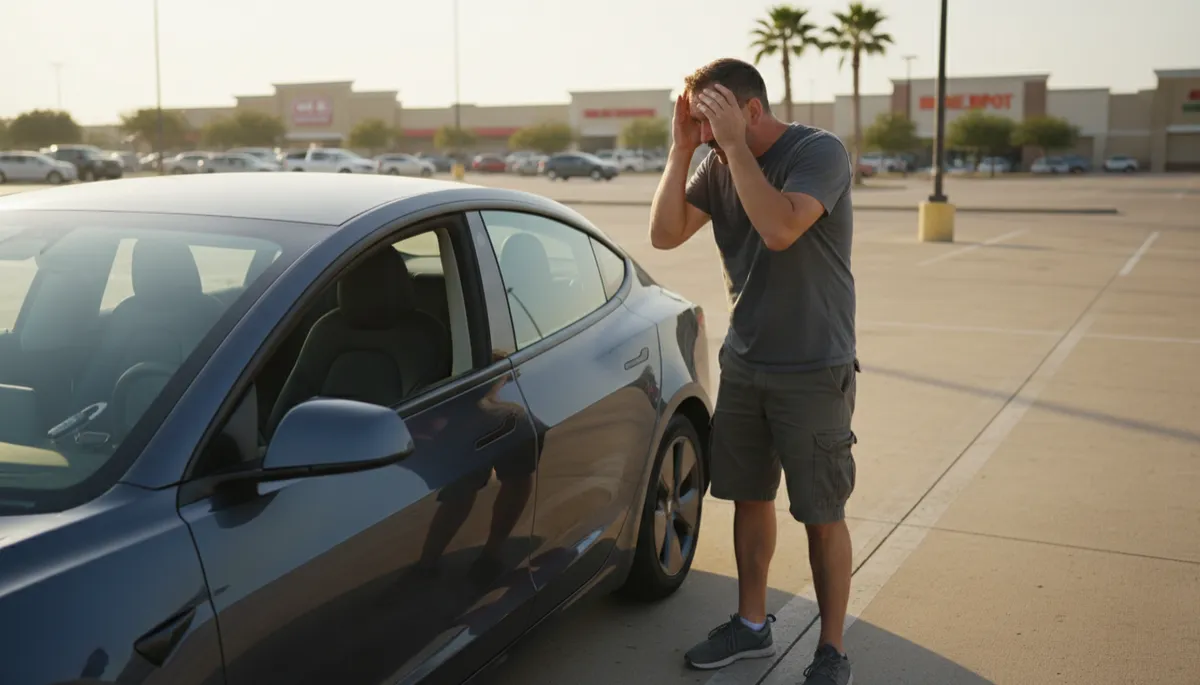
You walked back to your car, reached into your pocket, and felt nothing. Or you closed the door and heard the lock click a split second before you realized your keys were still sitting on the seat. That moment — the one where your stomach drops — is something nearly every driver experiences at some point.
Getting locked out of your car is one of the most common roadside emergencies in the DFW Metroplex. It's also one of the most mishandled. The immediate instinct for many people is to improvise: try a wire hanger, wedge a card into the door frame, or call someone who "knows a trick." What usually follows is a scratched door, a triggered alarm, or — in some cases — a damaged locking mechanism that makes the original problem much worse.
The fastest and safest path forward is almost always the same: call a professional automotive lockout service. A trained technician can get you back into your vehicle in minutes without causing damage, and in the DFW area, response times are often under an hour.
But there's more worth knowing before that call, especially if you're stranded somewhere unfamiliar, dealing with summer heat, or locked out of a newer vehicle with keyless entry.
Why Vehicle Lockouts Happen
Car lockouts aren't a sign of carelessness — they're a predictable product of modern life. Routines get disrupted. Hands are full. Key fobs run out of battery. Modern auto-locking doors do exactly what they're designed to do, but sometimes at the wrong moment.
Some of the most common scenarios:
Distraction at the moment of exit. You parked in an unfamiliar spot, grabbed your bags or your coffee, and the muscle memory that usually keeps your keys in your hand broke down. The door locks, you walk away, and the keys are inside.
Dead key fob battery. Vehicles with push-button ignitions and keyless entry rely on a functioning fob. When the battery dies, you may not be able to unlock the door or start the car — even if the key itself is in your hand. Many drivers don't realize how dependent they are on a functioning fob until it stops working in a parking garage.
Children or pets locked inside accidentally. In the rush to get out of a vehicle — especially in a busy parking lot or when unloading groceries — a child or pet can end up locked inside. Auto-locking doors that engage as you step away make this happen faster than most people expect.
Broken or snapped keys. A worn key that breaks off in the lock creates the same locked-out situation, but with the additional problem of a fragment stuck in the mechanism. This requires professional extraction before any lockout technique can work.
Rental or unfamiliar vehicles. Driving a car you're not used to — different lock behavior, unfamiliar key placement — makes lockouts more likely, even for experienced drivers.
What Not to Do
This is where most lockout situations escalate from a minor inconvenience into a real problem.
Don't try to pry or wedge the door open yourself. Modern vehicles have reinforced door frames and tight weatherstripping seals. Sliding a wire hanger, a thin metal rod, or anything else into the door gap almost always scratches the paint, bends the door frame, or tears the weatherstrip. The damage is cosmetic and structural, and it won't be covered by most roadside claims.
Don't try a credit card or similar on a modern car. The "card in the door frame" technique that used to work on older spring-bolt locks hasn't applied to most vehicles in decades. Modern cars use deadbolts and linkage systems that cannot be manipulated with a flat object. All you'll accomplish is scratching your door and frustrating yourself.
Don't ask someone to break the window unless there is an immediate emergency — a person or pet showing signs of distress in dangerous heat. A broken window means glass throughout your interior, a vehicle open to the elements, and an immediate need for glass replacement that typically costs far more than a lockout call. Save this option for situations where waiting is genuinely dangerous.
Don't leave your car unattended in an unsafe location. If you're on an I-30 shoulder, in an isolated area, or in an unfamiliar neighborhood after dark, your safety is the first priority. Get yourself to a safe distance from traffic, stay visible, and call for help from a location where you feel secure.
When a Lockout Becomes an Emergency
Most lockouts are an inconvenience. Some become emergencies. Know the difference.
Call 911 immediately if:
- A child is locked inside the vehicle, especially when temperatures are elevated. In DFW summers, interior vehicle temperatures can climb to life-threatening levels within minutes — not hours.
- A pet is locked inside in hot weather.
- You are in a physically unsafe location and cannot move to safety.
- A passenger with a medical condition is inside and needs medication or is showing signs of distress.
When any of these apply, emergency services take priority over waiting for a roadside truck. Law enforcement and fire departments in the DFW area are equipped to handle emergency lockouts quickly.
For all other situations — keys on the seat, locked out in a parking lot, dead key fob — a professional roadside lockout service is the right call.
Locked Out of a Newer Vehicle? It's More Complex Than You Think
If you drive a vehicle from the past five to eight years with keyless entry, push-button start, or an advanced security system, a standard slim-jim approach won't apply — and an untrained attempt to access your car could trigger the vehicle's immobilizer, making it temporarily undriveable.
Many newer vehicles also have internal door sensors designed to detect unauthorized entry attempts. Triggering these incorrectly can create an additional problem that requires a dealer visit to reset. A professional technician who works with modern locking systems knows how to access the vehicle without triggering alarms or security protocols.
This is particularly relevant for vehicles that use electronic door handles or hidden mechanical key access points that aren't obvious without training — a growing category across many manufacturers.
The Right Tool for the Job

When a professional lockout technician arrives, the process is straightforward. They assess your vehicle's door and lock type, then use a specialized air wedge and long-reach tool — a technique that gently creates a narrow gap in the door frame without damaging the weatherstrip or paint — to access the interior lock mechanism or unlock button. For vehicles where this isn't applicable, they have alternative methods suited to the specific make and model.
The actual unlock typically takes a few minutes once the technician is on-site. There's no damage, no drama, and no need for a dealer visit afterward.
The Best Prevention: A Spare Key
The most effective solution to a car lockout is a spare key stored somewhere it can actually be used. Options that work:
- With a trusted person — a family member, coworker, or friend who lives or works nearby — stored separately from your primary keyring.
- A magnetic key box attached to a non-obvious location on the vehicle frame. These are inexpensive and widely available. Keep this option for genuine emergencies and don't advertise it.
- A key at home or work in a push-button lockbox, reachable within a reasonable drive for a family member or friend when you need it.
If you drive a keyless vehicle, check with your dealer about a backup physical key option — many models still have a mechanical override that a traditional spare key can access, even without a fob battery.
Lockouts in DFW: A Few Things That Are Different Here
The DFW Metroplex has some characteristics that affect how lockouts play out in practice.
The heat is serious. North Texas summers regularly produce ambient temperatures above 100°F, and vehicle interiors reach dangerous levels far faster than most people imagine. If there's any person or animal inside a locked vehicle in summer heat, this is not a situation where you wait — not even briefly.
Traffic is unpredictable. Response times from Plano to Fort Worth to Grand Prairie all involve navigating one of the nation's most congested highway networks. Knowing the roads — I-20, I-30, SH-360, TX-161 — and routing efficiently matters. A provider based in the Arlington area has a real-world advantage in coverage time across Tarrant and Dallas counties.
Not all locksmiths do vehicle work. Residential and commercial locksmiths frequently refer automotive calls elsewhere. A dedicated roadside service focuses specifically on vehicles and has the tools and training for automotive locks — including modern keyless systems — rather than door knobs and deadbolts.
Parking structures and remote lots add complexity. Whether you're locked out at AT&T Stadium, a DFW airport parking garage, or a shopping center in Grand Prairie, location matters for both access and response routing. A local provider knows these areas.
Getting Back on the Road
When you're locked out in Arlington or anywhere across the DFW area, the team at Roadside Wrangler is available around the clock to get you back in your vehicle. Whether you're in a parking lot in Mansfield, on a highway shoulder near Irving, or stuck outside your car in Grand Prairie at 2 a.m., one call connects you with a technician who knows the area and carries the right equipment for modern vehicles. No damage, no wait for a dealership, no run-around.
Roadside Wrangler – 24/7 Towing Service | 3004 E Pioneer Pkwy, Arlington, TX 76010 | (469) 212-4712 | https://roadsidewranglertowing.com/ | Open 24 hours.