Severe Weather Towing in DFW: Stay Safe & Prepared
DFW towing, severe weather towing DFW, roadside emergency DFW
Severe Weather Towing in DFW: What to Do When Ice, Floods, or Extreme Heat Leaves You Stranded
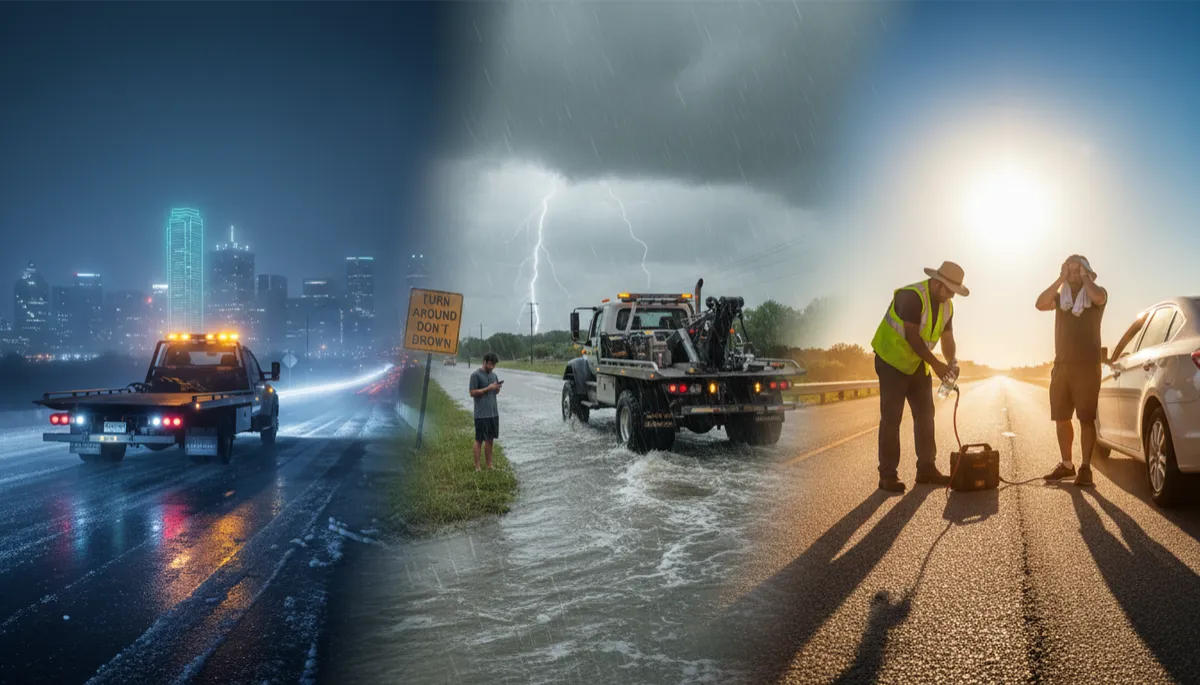
You’re crossing a DFW overpass in an ice storm and feel the car slide. Or you hit standing water on Pioneer Parkway during a flash flood and the engine dies. Or it’s a 105 °F afternoon on I‑20 and your temperature gauge spikes into the red. In that moment, you don’t need theory—you need to know exactly what to do, who to call, and how to stay safe until help arrives. This guide walks you through clear, practical steps for severe weather towing DFW drivers can rely on, so you can protect yourself, your passengers, and your vehicle when North Texas weather turns dangerous.
Why DFW Weather Creates Unique Towing Emergencies
The Dallas–Fort Worth area can see all four seasons in a single week. That volatility creates roadside emergencies that play out differently from other parts of the country. For drivers, understanding how local weather interacts with our highways, loops, and neighborhood streets is the first step to staying safe and knowing when to call a 24/7 towing service DFW trusts.
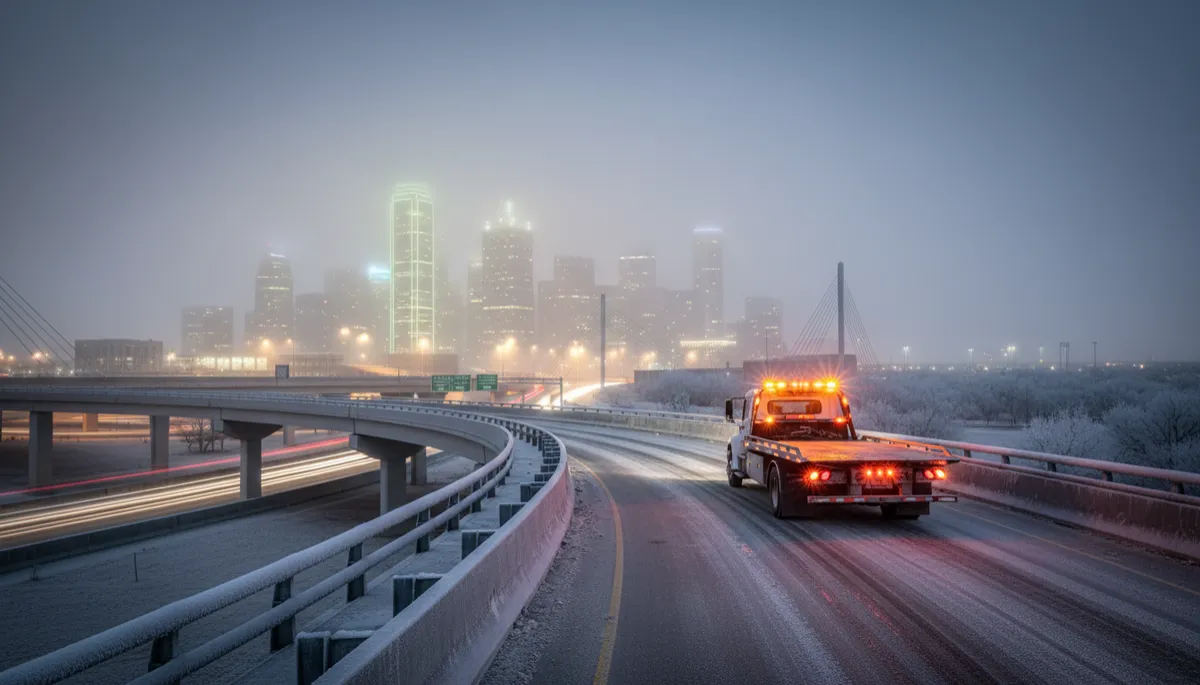
Winter ice storms. In North Texas, bridges, flyovers, and overpasses freeze first. Black ice can form even when the air temperature hovers just below freezing, especially overnight or early in the morning. Because DFW doesn’t stay below freezing for long stretches, you often get a thin, nearly invisible glaze instead of packed snow. That means sudden loss of traction, minor slide-offs into guardrails or ditches, and multi-car fender benders that all require careful, controlled towing—often with flatbed towing ice storm conditions demand to prevent additional damage.
Flash flooding. Our clay soils, wide concrete expanses, and fast‑moving thunderstorms make North Texas prone to sudden flooding. A single slow‑moving storm can drop inches of rain in a few hours, overwhelming storm drains and low spots. Underpasses, service roads, and creek crossings can go from damp to dangerous in minutes. Vehicles that stall in water may be swept, waterlogged, or left in places where it’s unsafe for a regular wrecker to operate—this is where experienced flash flood towing DFW services are essential.
Summer extreme heat. It’s not just the triple‑digit air temperatures; road surfaces in DFW can reach 150 °F or more. That kind of heat is brutal on engines, cooling systems, batteries, and tires. Overheating, dead batteries, and blowouts are common summer heat breakdown DFW scenarios. Standard “just wait it out” advice can be dangerous here—inside‑car temperatures can climb quickly, especially for children, older adults, and pets. In many cases, the safest choice is to call for professional help early rather than trying to limp the vehicle home.
In all three situations, the risk isn’t just mechanical damage—it’s exposure, low visibility, and other drivers who may be struggling with the same conditions. That’s why having a plan for severe weather towing in DFW is so important before you ever turn the key.
Ice Storm Breakdowns — What to Do Step by Step
If you break down or slide off the road during an ice event, stay calm and work through these steps one at a time. The goal is to keep you visible, warm, and out of harm’s way until a tow truck Arlington TX drivers trust can reach you.
- Stay in the vehicle unless it’s clearly unsafe. If you’re on the shoulder, in a lane, or lightly in a ditch but out of active flood risk, it’s usually safer to stay buckled inside with your hazards on. Other drivers may slide unexpectedly; being outside the vehicle on ice puts you at higher risk. If you’re in an active travel lane with vehicles sliding around you, or perched in a dangerous spot (for example, at the crest of a blind hill), call 911 for guidance and carefully move to a safer location only if it is safe to do so.
- Turn on hazard lights immediately. Visibility drops during winter storms. Hazards and, if available, road flares or reflective triangles make it easier for other drivers and your tow operator to see you in freezing rain, sleet, or snow.
- Do not try to push or rock the vehicle on ice. Spinning your tires can send the vehicle sideways with no warning. It’s also easy to slip and fall if you get out and try to push. Instead, set the parking brake if advised for your vehicle, keep the steering wheel straight, and wait for professional help.
- Call a professional tow service experienced with winter conditions. For ice storm towing Arlington TX and across the Metroplex, ask specifically whether they have flatbed trucks and chains or appropriate winter gear. Ice conditions often require flatbed towing to avoid damage to drivetrains, bumpers, and low‑clearance components when loading or pulling a vehicle that’s stuck or has slid into a barrier.
- Keep warm safely. Use seat heaters and blankets if you have them. You can run the engine periodically for heat, but make sure the exhaust pipe is not buried in snow or slush. Crack a window slightly to reduce the risk of carbon monoxide buildup, and never fall asleep with the engine running for long stretches.
Why Flatbed Towing Is Essential on Ice
On dry pavement, a traditional wheel‑lift truck can safely pull many vehicles. On ice, the story changes. A flatbed allows the operator to:
- Winch your vehicle straight onto a stable platform, reducing the risk of sliding sideways.
- Protect low bumpers, spoilers, and undercarriage components that can catch on icy ruts or curbs.
- Keep all four wheels off the ground, which is especially important for all‑wheel‑drive and many modern vehicles.
When you call, mention that you need flatbed towing ice storm conditions can support, and confirm that the company is actively operating in the area despite the weather.
Flash Flood Breakdowns — Never Drive Through Standing Water
Texas and federal emergency officials repeat the same phrase for a reason: “Turn around, don’t drown.” Just a foot or two of moving water can lift and sweep a vehicle. You cannot reliably judge depth or current by sight alone, especially at night or in heavy rain. For flash flood towing DFW situations, your personal safety always comes first—vehicles can be replaced; people cannot.
- Do not drive into standing or moving water. If you see water covering the road, even if other vehicles seem to be making it through, turn around and find another route. Low‑water crossings and underpasses in Arlington, Fort Worth, and Dallas can hide washed‑out pavement or sudden drop‑offs.
- If water is rising around a stopped vehicle, exit and move to higher ground immediately. If your engine stalls in water, do not try to restart it—that can cause severe internal damage. If water reaches the bottom of your doors or begins to rise quickly, unbuckle, help passengers out, and head for the nearest higher, stable ground. Do not stay in the car if water is climbing above door level.
- Once you’re safe, call for towing. Submerged or flood‑damaged vehicles often require specialized equipment and careful extraction. Professional operators know how to approach waterlogged areas, avoid hidden hazards, and secure your vehicle without causing more harm. Let the dispatcher know if the vehicle is still in water, partially submerged, or in a difficult‑to‑reach location.
- Document what you can for your insurance claim. Once you’re in a safe place, take photos or short videos of the scene, the depth of water (if visible), and your vehicle’s position. Note the time, location (cross streets, landmarks, or GPS pin), and any visible damage. Do not wade back into unsafe water to get better pictures—insurers value your safety more than a perfect photo set.
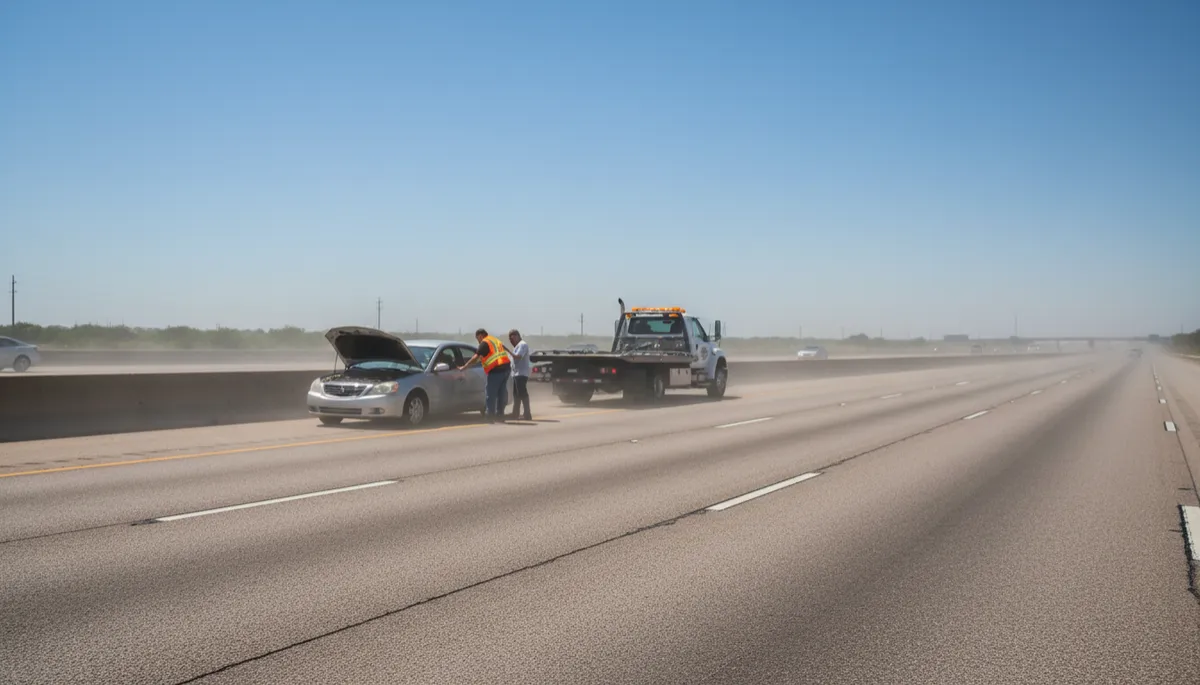
Professional roadside help reduces risk when extreme Texas heat strands your vehicle.
Summer Heat Breakdowns — Overheating, Dead Batteries, and Blowouts
North Texas summers are tough on vehicles. Planning ahead for a summer heat breakdown DFW drivers might face can keep a minor issue from turning into a dangerous roadside emergency.
Engine overheating. If your temperature gauge spikes or you see steam from under the hood:
- Pull over as soon as it is safe, preferably to a wide shoulder or parking lot.
- Turn off the A/C and switch the heater to full hot; this can help draw some heat away from the engine while you coast to a stop.
- Turn off the engine and pop (but do not open) the hood to let heat escape.
- Never open the radiator cap on a hot engine. Pressurized coolant can spray and cause severe burns. Wait until the engine is completely cool before checking coolant levels or attempting any DIY fixes.
Dead batteries in extreme heat. Heat accelerates the breakdown of battery fluid and internal components, especially after several summers. Signs you may need a jump or tow include slow cranking, dim lights, or repeated clicking when you turn the key. Keeping jumper cables or a portable jump pack in your trunk can help, but if you’re in heavy traffic, on a narrow shoulder, or unsure about safely jump‑starting, it’s wiser to call a 24/7 towing service DFW drivers rely on for roadside assistance.
Tire blowouts in summer heat. Super‑heated pavement and under‑inflated tires are a bad combination. A sudden blowout at highway speed is frightening and can leave you on a narrow shoulder in full sun. Keep tires properly inflated and inspect them regularly for cracks or bulges. If you do experience a blowout, steer straight, ease off the accelerator, and gently guide the car to a safe stop. Only attempt a tire change yourself if you can get well off the roadway on a stable, level surface. Otherwise, call for towing or roadside help.
When to call for a tow vs. try a quick fix. As a rule of thumb, if you’re in a high‑speed area, visibility is poor, you’re unsure of the problem, or you feel unsafe getting out of the vehicle, treat it as a roadside emergency DFW professionals should handle. A short tow is a small price to pay compared with the risk of injury on a busy highway shoulder in 100 °F heat.
How to Stay Safe While Waiting for Your Tow Truck in Severe Weather
Once you’ve called for help, your priority is staying as safe and comfortable as possible until the truck arrives. Conditions in DFW can change quickly, so adjust your approach based on what the weather is doing right now.
- On ice: Stay inside the vehicle with your seatbelt on, hazards flashing, and wheels turned away from traffic if you’re on a shoulder. If another crash occurs nearby or your vehicle is struck, the car’s structure and airbags offer more protection than standing outside. Call 911 if you’re in a travel lane, involved in a collision, or feel that your position is unsafe.
- In flooding: If the water is not rising, stay put, keep your seatbelt on, and watch conditions carefully. If water starts to climb, prioritize getting yourself and your passengers to higher ground, then wait for responders or your tow truck at a safe distance from the water’s edge.
- In extreme heat: Whenever possible, move to shade—under an overpass, tree, or nearby building—while still keeping your vehicle in sight for when the tow truck arrives. Drink water if you have it, loosen tight clothing, and watch for signs of heat exhaustion such as dizziness, nausea, or headache. If you or a passenger begins to feel seriously ill, call 911 rather than waiting it out.
In every scenario, share your exact location with the tow company. Cross streets, nearby exits, mile markers, and business names all help. Dropping a GPS pin from your smartphone and texting it to the dispatcher (if their system allows) can shave precious minutes off response time, especially during widespread severe weather when multiple calls are coming in at once.
What Makes a Tow Company Reliable in Severe Weather?
Not every towing company operates the same way when storms roll through North Texas. When you’re choosing who to trust before an emergency—or deciding who to call from the shoulder in the middle of one—look for a provider that’s built to handle severe weather towing DFW‑wide, not just routine tows on sunny days.
- True 24/7 availability during weather events. Some operators pause service when ice or high water makes driving difficult. A reliable team has protocols, trained drivers, and properly equipped trucks to continue operating as long as it’s safe to do so, including overnight ice storms, early‑morning flash floods, and late‑evening heat‑related breakdowns.
- Flatbed trucks and specialized equipment. Severe weather often leaves vehicles in ditches, on medians, or partially submerged. A company that offers flatbed towing DFW drivers can count on—along with winches, straps, and safety gear—can recover your car or truck with less risk of added damage.
- Local DFW road knowledge. A driver who knows which bridges freeze first, which underpasses flood, and which detours usually stay open can reach you faster and avoid getting stuck themselves. Familiarity with Arlington, Dallas, Fort Worth, and the surrounding cities means better route choices when conditions are changing minute by minute.
- Fast dispatch and GPS tracking. When you’re stranded, clear communication matters. A dependable towing company will tell you when a truck is assigned, provide an estimated arrival time, and update you if conditions or traffic cause delays. GPS‑equipped trucks help dispatchers choose the closest driver and reroute around closures or flooded areas.
When you combine those traits with courteous drivers and careful vehicle handling, you get the peace of mind that, even in the middle of a North Texas storm, you’re not facing it alone.
When DFW weather turns dangerous, the last thing you want to worry about is whether your tow company will answer the phone. Having a trusted local team on speed dial means that if ice, flooding, or extreme heat leaves you stranded, help is already on the way. Roadside Wrangler is available 24 hours a day, every day of the year—including during ice storms, heavy rain, and the hottest Texas summers. One call and a certified driver is dispatched to your location with the right equipment to get you and your vehicle to safety. Roadside Wrangler – 24/7 Towing Service | 3004 E Pioneer Pkwy, Arlington, TX 76010 | (469) 212-4712 | https://roadsidewranglertowing.com/ | Open 24 hours.