Tire Blowout on a DFW Highway: What to Do (and When to Tow)
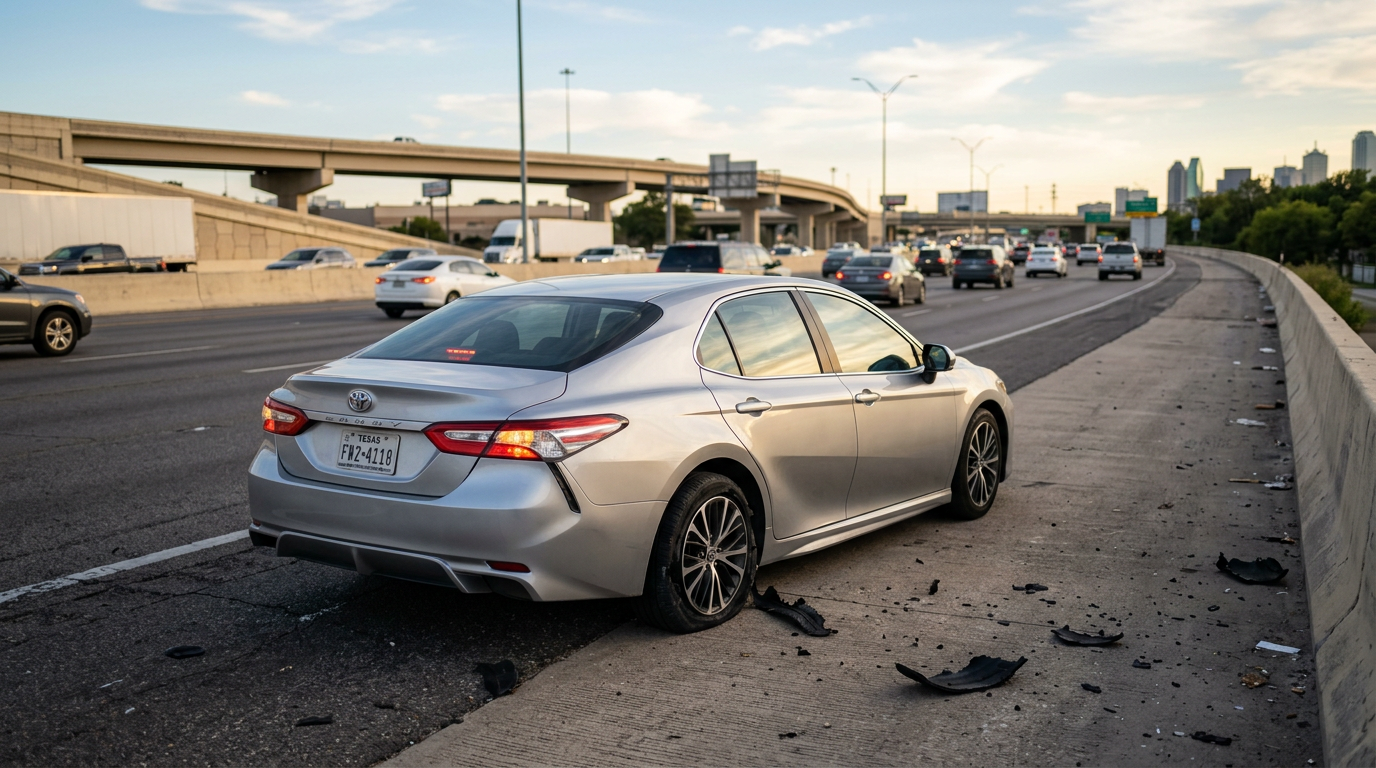
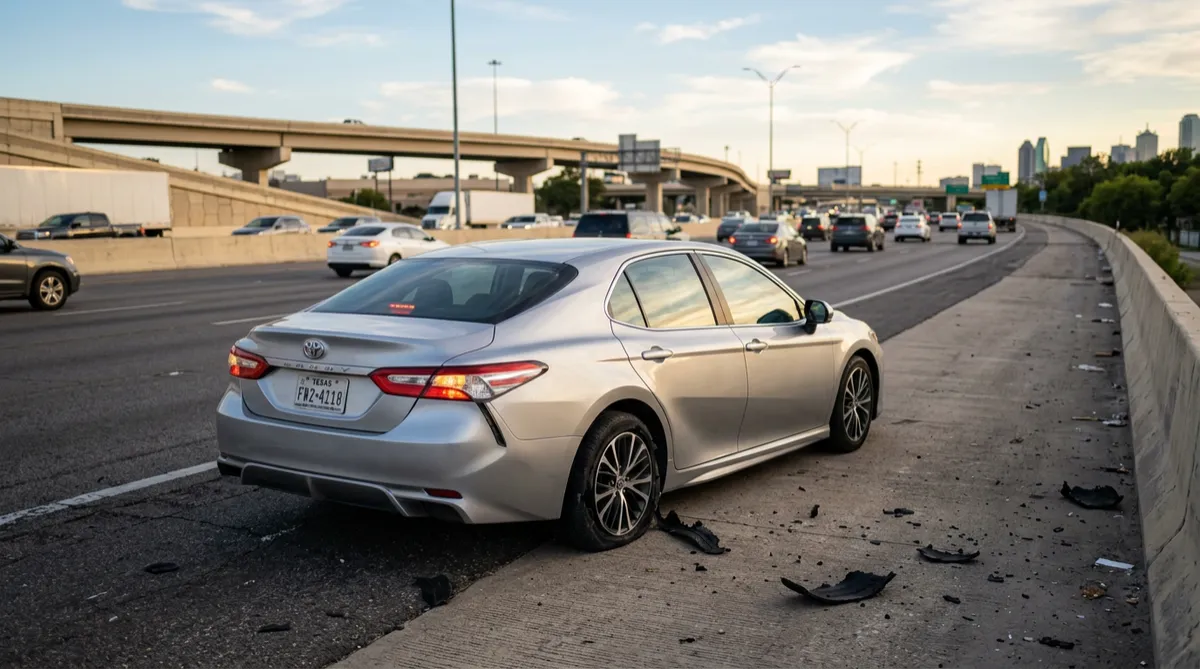
The bang came first. Then the steering wheel jerked and the car pulled hard to one side while you were doing highway speed on I-30, I-20, or Highway 360. If that is where you are right now, here is the short answer: hold the wheel firmly with both hands, ease off the gas, let the car slow on its own, and steer smoothly toward the shoulder. Do not slam the brakes. Once you are stopped with your hazards on, decide whether you can safely change the tire or whether it is time to call a tow truck.
The rest of this article explains why that advice works, what to do at each stage, and how to make the call between a spare and a tow.
Blowout vs. Slow Flat: Why the Difference Matters
A slow leak lets air out gradually. You might notice a soft feel in the steering or a dashboard tire-pressure warning. A blowout is sudden. The tire loses pressure in an instant, the car pulls toward the damaged side, and you may hear a loud flapping as pieces of rubber strike the wheel well.
That sudden change is what makes blowouts frightening, but it does not mean the car is out of control. It means the car needs a calm, steady driver for the next several seconds. For what to do once you are stopped with any kind of flat, see our guide on Flat Tire on DFW Highway: What to Do Next. This article focuses on the moment of the blowout and the decisions right after it.
The First Few Seconds: What to Do and What to Avoid
Most of the danger in a blowout comes from the reaction, not the failure itself. Instinct says to stomp the brake or yank the wheel. Both can make things worse.
- Grip the wheel with both hands. The car will try to pull toward the failed tire. Keep the wheel steady instead of overcorrecting.
- Ease off the accelerator. Let the car slow gradually. Lifting off the gas reduces speed without the weight shift that hard braking causes.
- Turn on your hazard lights early so drivers behind you understand something is wrong.
- Check mirrors, then steer smoothly toward the right shoulder. Pick your exit path early.
- Brake lightly only after the car has slowed and feels under control.
Avoid hard braking, sharp steering, and stopping in a travel lane if you can reach a shoulder, exit ramp, or parking lot. Rolling slowly on a damaged tire for a short distance will likely harm the wheel, but that is a smaller problem than being stopped in fast traffic.
Where to Stop on a DFW Highway
On a freeway with a wide right shoulder, pull over as far as you can. If the shoulder is narrow, bordered by a concrete barrier, or squeezed by construction, keep rolling slowly with your hazards on until you find a wider spot, an exit, or a frontage road. Toll roads can have fewer exits and tighter shoulders, so our article on Stranded on DFW Toll Roads is worth a read.
Once stopped, turn the wheels away from the roadway, set the parking brake, and leave the hazards running. If it is dark, our guide on Night Breakdown in DFW: Stay Safe After Dark applies as well.
Stay in the Car or Get Out?
On a busy highway with a narrow shoulder, the safest place is often inside the car with your seat belt on. If you do need to leave the vehicle, use the door farthest from traffic, move well away from the road, and stand behind a guardrail or barrier if one is available.
Can You Change the Tire Yourself?
Sometimes, but a highway shoulder is one of the least forgiving places to do it. Ask yourself honestly:
- Is the ground firm and level? A jack on a soft or sloped shoulder can slip. Never get under a car held up only by a jack.
- Is there enough room away from traffic? If passing vehicles are close enough to rock your car, the shoulder is too narrow.
- Do you have a usable spare, jack, and lug wrench? Many vehicles carry a compact spare, an inflator kit, or no spare at all. Your owner's manual explains what yours has.
- Are conditions safe? Heat, rain, darkness, and heavy traffic all raise the risk.
If any answer is no, calling for help is the better choice. A service call costs money, but an injury on a highway shoulder costs far more.
When a Blowout Means a Tow, Not a Spare
Even with a spare and a safe spot, a blowout can cause damage that makes driving unwise. Pieces of a failed tire and a spinning bare wheel can harm parts you cannot see from the driver's seat. A tow is the safer call when:
- You can see damage to the wheel, fender, body panels, or suspension near the failed tire.
- The car pulls, vibrates, or makes unusual noises after you stop.
- You smell something burning or see fluid under the car.
- The wheel is bent or cracked, or you have no working spare.
- Your vehicle has run-flat or low-profile tires, or a compact spare with speed and distance limits that do not fit your trip. Your owner's manual lists those limits.
Driving on damage turns a repairable situation into a more expensive one. If you are unsure, have a professional look before you drive.
What to Tell Dispatch When You Call
A clear call gets the right truck to you faster. Have this ready:
- Exact location: highway name, direction of travel, nearest exit or mile marker, and landmarks.
- Your vehicle: year, make, model, and whether it is front-, rear-, all-, or four-wheel drive.
- What happened: a blowout, which tire, and any visible damage.
- Whether you have a spare.
- Where you want the car taken: a tire shop, your home, or a repair facility.
- Hazards: a narrow shoulder, construction, or poor visibility.
For tips on staying safe until help arrives, read What to Do While Waiting for a Tow Truck.
How a Tow Truck Handles a Car With a Blown Tire
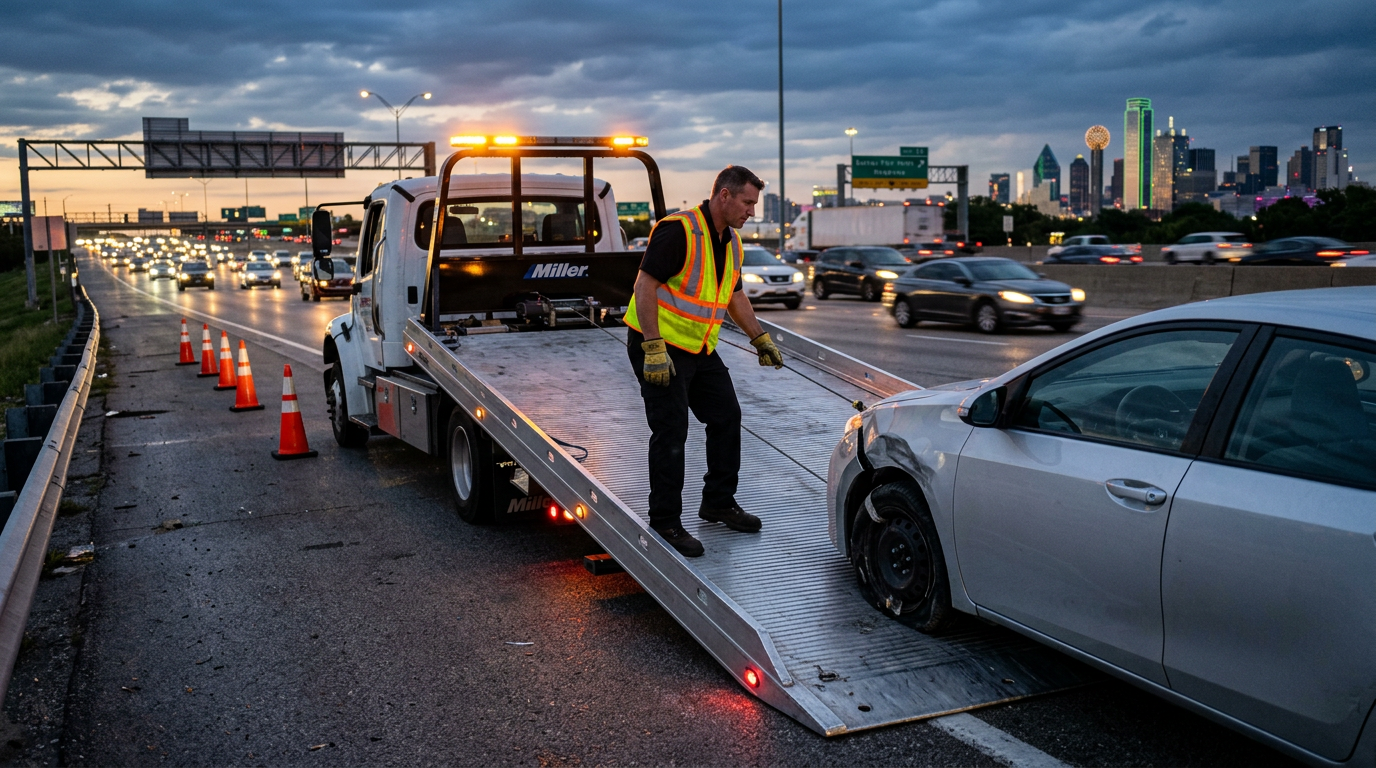
A car with a destroyed tire cannot roll normally, and dragging it can damage the wheel and brake components. On a flatbed, the vehicle is winched up the bed and secured so all four wheels are off the ground. Depending on the damage, an operator may instead use dollies under the affected wheel. The right method depends on your vehicle and which wheels are involved. Our comparison of Flatbed vs. Wheel-Lift Towing explains the difference.
All-wheel-drive and four-wheel-drive vehicles need particular care, because pulling them with some wheels on the ground can harm the drivetrain. If you drive one, say so on the call. Our AWD and 4WD towing guide explains why.
Checking Your Tires Before Trouble Starts
You cannot prevent every blowout, but a few habits lower the odds, especially with the heat and long highway miles around DFW:
- Check pressure regularly, including the spare, using the number on the sticker inside the driver's door rather than the sidewall.
- Inspect the tires. Bulges, sidewall cracks, exposed cords, uneven wear, or embedded objects are reasons to see a tire shop.
- Know where your spare, jack, and lug wrench are and how to use them before you need them.
After the Tow: What Comes Next
Ask the shop to inspect more than the one tire: the wheel, the other tires on that axle, the suspension, and the wheel well area. If one tire failed from wear or age, the others may be close behind, and the shop can advise whether to replace them in pairs or as a set. If you are unsure whether your insurance covers the call, read Does Car Insurance Cover Towing in DFW?
A Blowout Is Scary, but It Is Manageable
Drivers who know the sequence of grip, ease off, signal, and steer to safety are in a far better position than those reacting on instinct. Once you are stopped, the next best decision is an honest one: if the shoulder is tight, traffic is close, or the damage looks bigger than a tire, let a professional take over.
If a blowout leaves you stranded anywhere in Arlington or the DFW Metroplex, the team at Roadside Wrangler – 24/7 Towing Service is ready to help at any hour. Call (469) 212-4712, tell the dispatcher where you are and what happened, and we will send the right truck so you can stop worrying about the roadside and get back to your day.
Roadside Wrangler – 24/7 Towing Service | 3004 E Pioneer Pkwy, Arlington, TX 76010 | (469) 212-4712 | https://roadsidewranglertowing.com/ | Open 24 hours