Car Won't Roll? Towing a Locked Wheel or Stuck Brake in DFW
Your car will not roll. The parking brake feels welded on, one wheel will not turn, the shifter will not leave Park, or the transmission quit and now the car just sits there. You are probably asking two things: can this car still be towed, and will towing it make the damage worse?
The short answer is yes, almost any vehicle can be moved, but the method matters a great deal. A car with a wheel that will not turn, or a drivetrain that should not spin, is normally lifted onto a flatbed or has the stuck wheels placed on dollies first. It should not be dragged or pulled along with its tires on the pavement.
Why a Car Refuses to Roll
Knowing the likely cause helps you describe the problem accurately on the phone, and that helps the dispatcher send the right truck and equipment. These are the most common reasons a vehicle will not move freely:
- A stuck parking brake. A cable can seize or a rear brake can stay clamped after the brake has been applied, especially on a car that sat for a long time. Some newer cars use an electronic parking brake that depends on battery power to release.
- A seized brake caliper or wheel bearing. If a caliper does not release, the wheel drags and may smell hot or burning. A failed wheel bearing can grind, wobble, or lock up.
- A failed transmission or drivetrain part. When internal parts break, the car may not move under its own power, and spinning the drive wheels on the road can cause more harm.
- A shifter stuck in Park. On many vehicles the shifter is held by an interlock that needs the battery and the brake pedal. A dead battery or a failed switch can leave the car locked in Park, and with the parking pawl engaged the drive wheels will not turn.
- Collision or curb damage. A bent wheel, broken suspension part, or damaged axle can stop a wheel from turning or leave it pointing the wrong way.
Why Dragging a Locked Car Is a Bad Idea
If a wheel will not rotate and the car is pulled with that tire touching the ground, the tire skids. A skidding tire can grind a flat spot into the rubber, and it can wear through the tread and sidewall in a short distance.
A failed or unlubricated drivetrain brings a different risk. Many automatic transmissions rely on the engine running to circulate fluid, so towing a car with its drive wheels rolling on the road can damage the transmission even if it was only slightly faulty to begin with. Owner's manuals often give specific towing limits, which is one reason a flatbed is the safer default.
How a Tow Operator Moves a Car That Will Not Roll
The goal is simple: get all four tires off the ground, or make sure every tire that touches the ground can turn freely. In practice, an experienced operator usually follows a sequence like this:
- Assess the vehicle. The operator checks which wheels turn, whether the car is in Park or Neutral, the drivetrain type, and how much room there is to work.
- Place wheel dollies under the stuck wheels. Dollies, sometimes called go-jacks or towing skates, cradle the tire so the car can roll on the dolly's own small wheels even though the tire itself cannot turn.
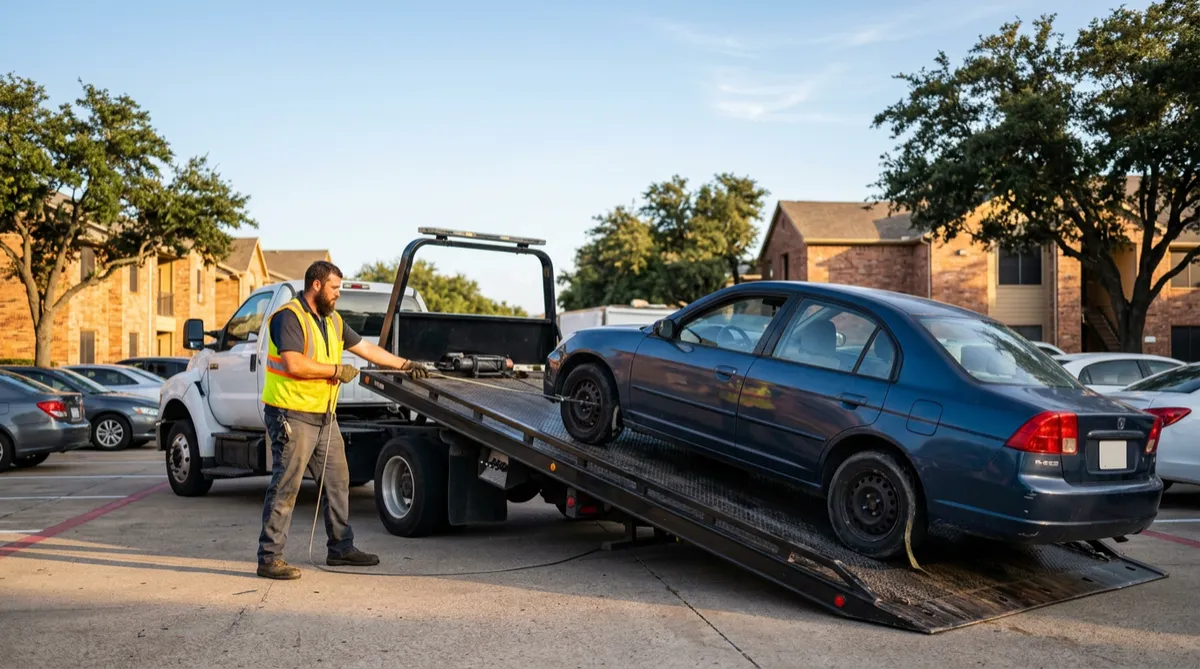
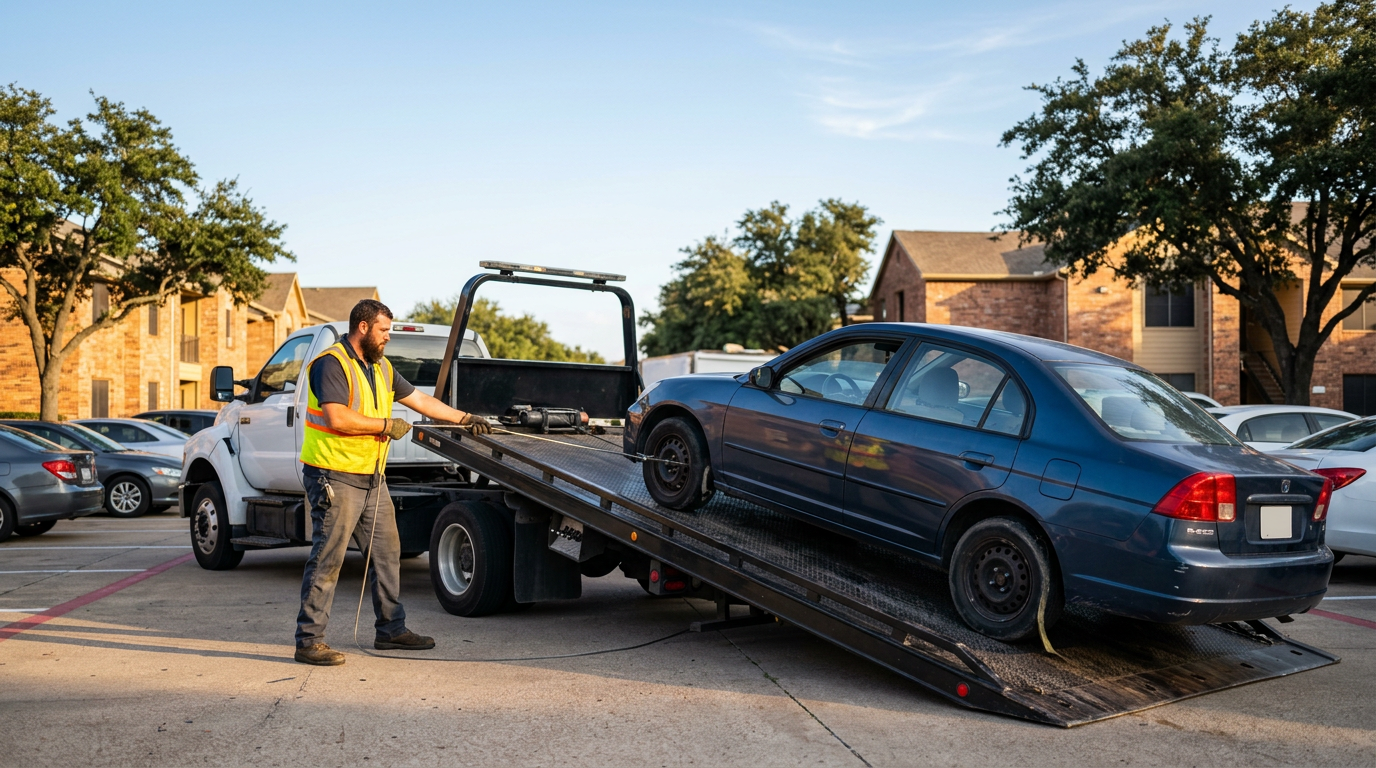
- Winch the car onto a flatbed. The bed is tilted, the cable is attached to proper recovery points, and the car is pulled up slowly and steadily. With the stuck wheels on dollies, the car travels up the bed without grinding.
- Secure the car. Straps or chains hold the vehicle to the bed before the truck pulls out.
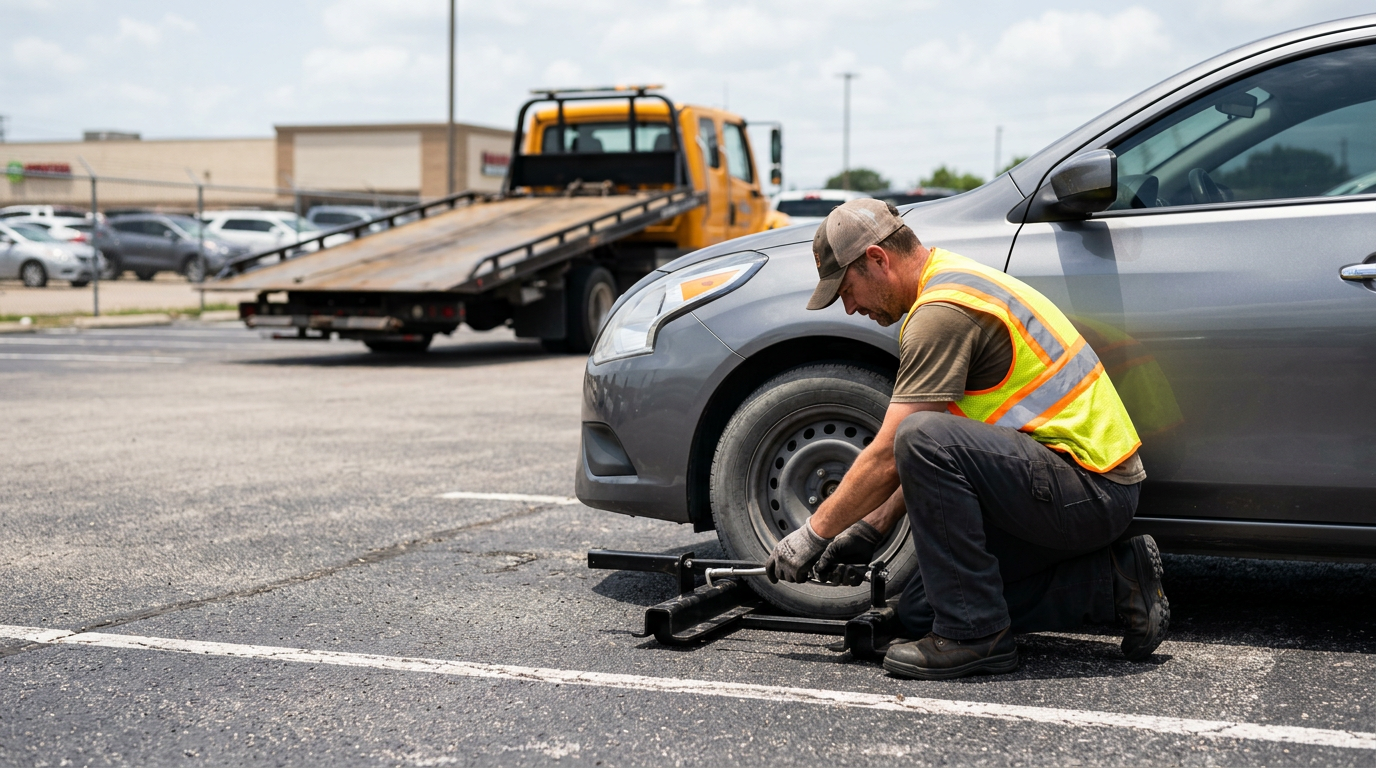
A wheel-lift truck can also move some cars with this problem, but only if the wheels left on the ground can roll freely. If the locked wheels are the ones that would stay on the pavement, a flatbed or dollies are the better choice.
Special Situations to Mention Before the Truck Arrives
All-wheel-drive and four-wheel-drive vehicles
These vehicles send power to every wheel, so rolling any tire on the road with the others lifted can strain the drivetrain. They are usually best moved on a flatbed with all four wheels off the ground. Always tell the dispatcher if your vehicle is AWD or 4WD.
Hybrids and electric vehicles
Many hybrids and electric vehicles use electronic shifting and electronic parking brakes, and their manufacturers often specify flatbed transport. A dead 12-volt battery can leave one of these vehicles stuck in Park with no easy way to release it. Check the owner's manual for the manufacturer's towing instructions and share the make and model with the dispatcher.
Tight lots, garages, and low cars
Across the DFW Metroplex, many breakdowns happen in apartment parking lots, shopping center spaces, and garages with low ceilings and tight turns. A car that cannot roll cannot simply be nudged out of the way, so the operator may need dollies and a little room to maneuver. Mention the ceiling height if you are in a garage, and say if the car is lowered.
What Not to Do While You Wait
- Do not keep driving a car that is grinding or dragging. If a wheel is locking up on the road, continuing can turn a brake repair into a wheel, hub, or tire repair.
- Do not force the parking brake release with tools. Pulling hard on a seized cable or striking components can break something that would have been a simple fix.
- Do not push the car on a slope or near traffic. A heavy car that suddenly starts rolling is dangerous.
- Be careful with the shift lock release. Many vehicles have a small slot or cover near the shifter that lets you move out of Park with the ignition off. Use it only as the owner's manual directs, and tell the operator if you have used it so they know the car's current state.
- Do not try a homemade tow. A rope or chain pulled by another vehicle can wreck steering, brakes, and bumpers, and it puts both vehicles and the people near them at risk.
If you are on a busy road, turn on your hazard lights and stay somewhere safe, either buckled in the car or well away from traffic. Your safety matters more than the car.
What to Tell the Dispatcher
The more precise your description, the better the truck and tools the operator brings. Have these details ready when you call:
- Year, make, and model of the vehicle
- Front-wheel drive, rear-wheel drive, AWD, or 4WD, and whether it is automatic or manual
- Which wheel will not turn, or whether the problem is the shifter or the parking brake
- Any grinding, smoke, burning smell, or warning lights you noticed
- Whether the car is in Park or Neutral, and whether the key or fob is available
- Your exact location, including garage height, a tight lot, or soft ground nearby
- Where the car is going, such as a repair shop or your home
A Note on Cost
Moving a car that will not roll can take more time and equipment than a standard hookup. Cost depends on factors such as distance, vehicle type, location, and equipment needed, so ask for a quote when you call and describe the vehicle fully so the quote matches the job. Insurance or roadside coverage may help in some cases, so check your policy while you wait.
The Bottom Line
A car that will not roll is not a lost cause, and it is not a reason to accept a rough tow. The right method keeps the tires, brakes, and drivetrain from taking more damage: dollies for the stuck wheels, a flatbed for the trip, and an operator who checks the vehicle first.
If your car is stuck in Park, has a locked wheel, or simply will not move, Roadside Wrangler – 24/7 Towing Service is ready to help any time of day or night. Our team serves Arlington and the surrounding DFW Metroplex, and we can send a truck equipped to move your vehicle without dragging it. Call us at (469) 212-4712, tell us what the car is doing, and we will get you moving again.
Roadside Wrangler – 24/7 Towing Service
3004 E Pioneer Pkwy, Arlington, TX 76010
Phone: (469) 212-4712
Website: https://roadsidewranglertowing.com/
Open 24 hours