What to Do While Waiting for a Tow Truck
Roadside Safety, DFW Tow Truck, Arlington TX Towing
What to Do While Waiting for a Tow Truck in DFW
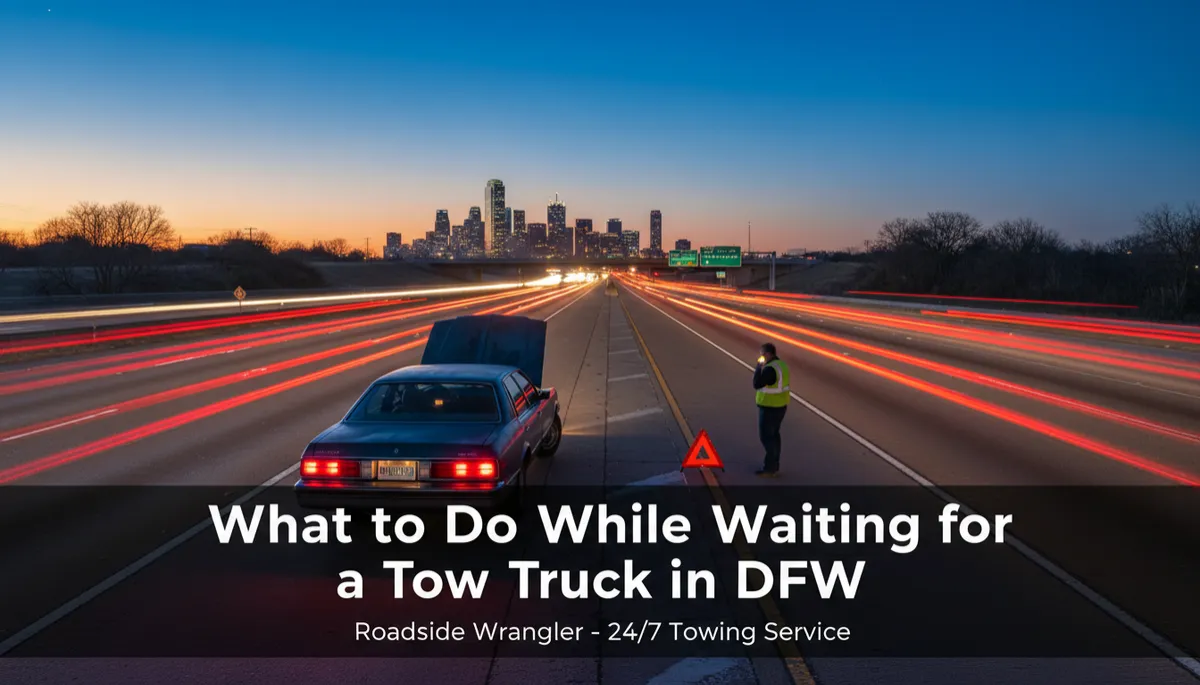
Your engine cuts out on I-20, traffic is flying past, and your car is losing speed fast. Maybe it is late, the kids are in the back seat, or the Texas sun is beating through the windshield. You get the vehicle to the shoulder—heart racing—and now you are stranded on a highway in DFW, watching the hazard lights blink while you wait for a tow truck. In that moment, knowing exactly what to do next can make the difference between a stressful breakdown and a safe, controlled wait for help.
The Moment Your Car Dies on a DFW Highway
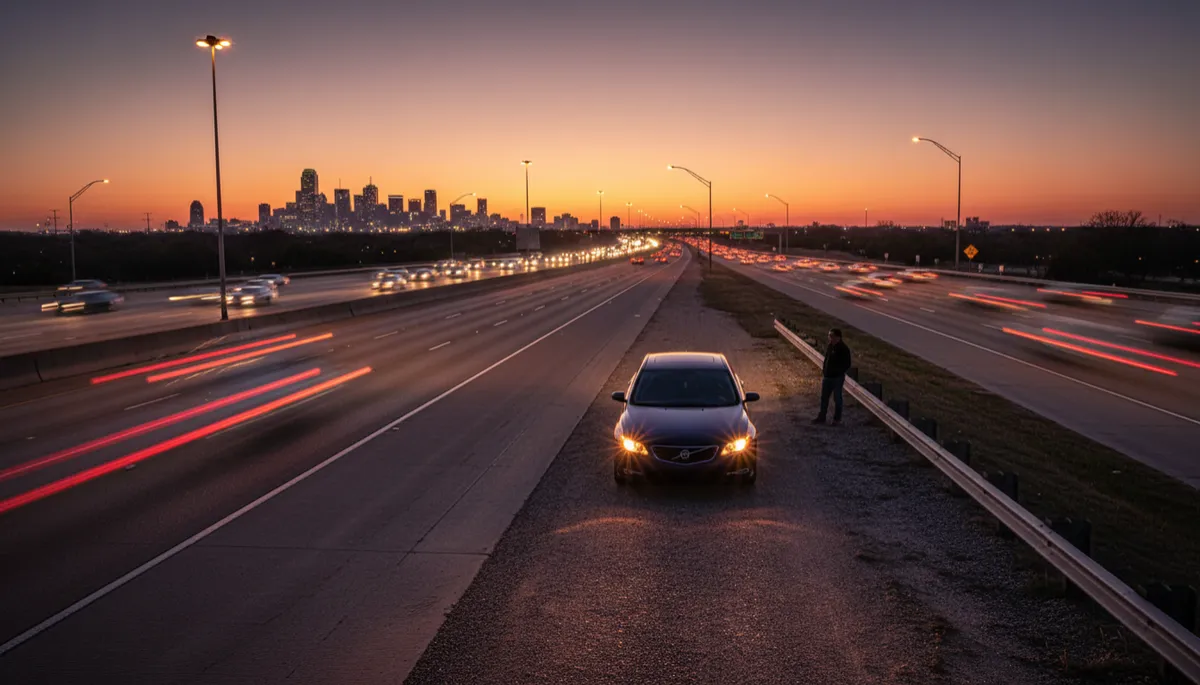
When your vehicle suddenly loses power on I-30, I-35W, SH 360, or Loop 12, your first instinct is often panic. You hear horns, feel the vibration of trucks passing, and see headlights closing in behind you. You might be wondering what to do waiting for tow truck help to arrive and how to keep everyone in the car calm and safe until it does. The good news is that a few clear steps, taken in order, can steady the situation and greatly reduce your risk while you wait for a DFW tow truck or roadside assistance service to reach you.
Before anything else, focus on one priority: putting space and protection between you, your passengers, and moving traffic. Once that is handled, you can think about calls, belongings, and how to handle the Texas heat or nighttime conditions. The following steps are based on what experienced roadside professionals in the Dallas–Fort Worth area see every day and are designed to be practical and straightforward for any driver, even if you have never been stranded on a highway in DFW before.
Step 1: Get to Safety Immediately
As soon as you feel something is wrong—engine sputtering, loss of power steering, a flat tire—signal and start moving toward the right shoulder as smoothly as you can. Do not slam on the brakes in a live lane if you can avoid it. Instead, ease off the accelerator, flip on your hazard lights, and steer toward the nearest safe spot: a wide shoulder, an exit ramp, or a nearby parking lot if you can coast that far safely.
Once you are stopped, set the parking brake and keep your wheels turned slightly away from traffic if you are on a shoulder. This way, if your vehicle is bumped from behind, it is less likely to roll back into the lane. If you are stuck in the left lane with a narrow median, safety becomes even more urgent. In that case, stay buckled, keep your hazards on, and wait for instructions from 911 or your tow truck Arlington TX dispatcher before trying to cross lanes on foot. Crossing a busy freeway on your own is almost always more dangerous than staying inside the vehicle with your seat belt fastened and lights flashing.
Step 2: Alert Other Drivers and Make Your Vehicle Visible
After you have reached the safest spot you can, your next job is to make your vehicle as visible and predictable as possible to other drivers. Turn on your hazard flashers and leave them on. If it is dark, turn on your interior dome light as well; this can make it easier for the tow operator to spot you and also signals to passing drivers that the vehicle is occupied and disabled, not just parked.
If you have reflective triangles or road flares and it is safe to get out—meaning you are on a wide shoulder or off the highway—place them behind your vehicle. Start about 10 feet behind your bumper, then another at roughly 100 feet, and a third further back if you have it. Always walk facing traffic and stay as far from the travel lane as possible. On busy DFW highways with fast-moving vehicles, do not risk stepping into the lane to set up equipment; your safety comes before any gear you might have in the trunk.
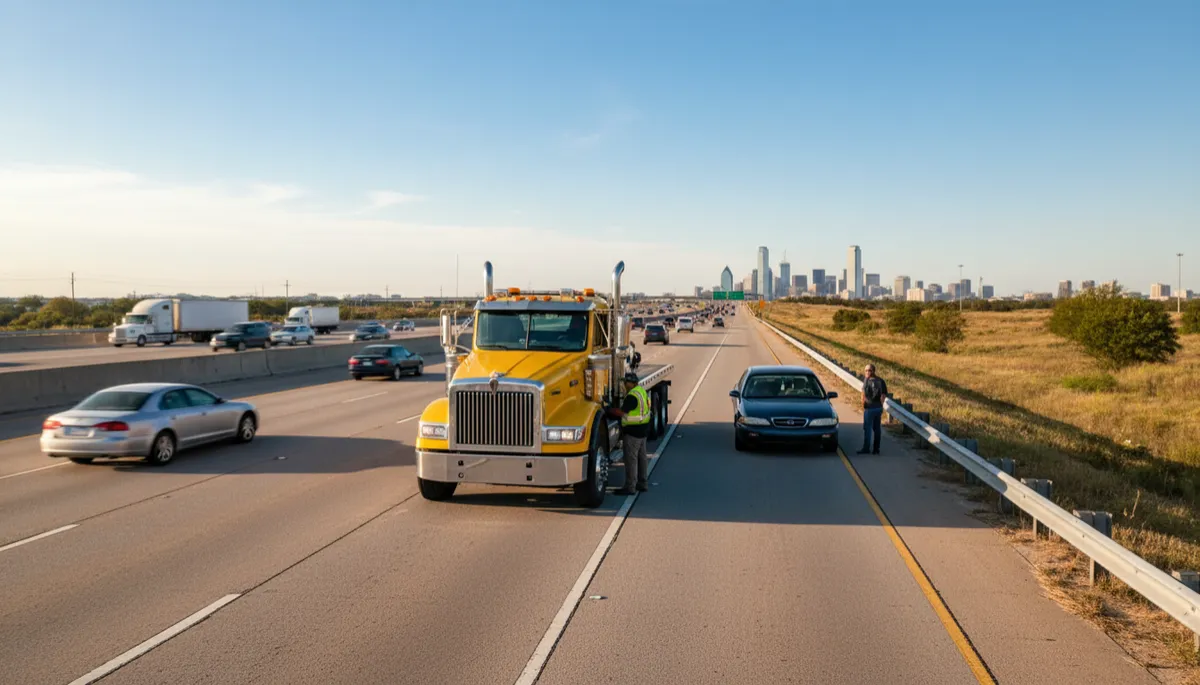
Clear signals and a safe position make it easier for DFW tow trucks to reach you.
Step 3: Call for Help – What to Tell the Dispatcher
Once you are as safe and visible as you can reasonably be, it is time to call for help. If you are in immediate danger—for example, stuck in a live lane with no shoulder—dial 911 first. Otherwise, contact a trusted roadside assistance DFW provider or a tow truck Arlington TX service directly. When the dispatcher answers, stay calm and give clear, simple information. This helps them get the right truck and equipment to you faster and reduces confusion on the shoulder or ramp where you are stranded.
- Your exact location: Mention the highway (I-20, I-30, I-35W, SH 360, Loop 12), the direction you are traveling, the nearest exit number, and any visible landmarks like overpasses, billboards, or nearby businesses.
- Vehicle details: Share your make, model, color, and license plate if you can see it easily. This helps the driver spot you quickly among other stopped vehicles.
- What happened: Describe the problem in plain language—“engine died,” “flat front driver-side tire,” “overheating with steam,” or “battery completely dead.” This helps the tow operator know whether you might need a flatbed, a standard wrecker, or simple jump-start or tire help.
- Who is with you: Let the dispatcher know if you have children, older adults, or pets in the car, or if anyone has a medical issue. They can factor this into urgency and advice while you wait.
Ask for an estimated arrival time and the name of the company or driver heading your way. When you see a truck pull up, compare it with what the dispatcher told you. This simple step adds a layer of security when you are stranded on highway DFW shoulders or ramps and approached by anyone offering help.
Step 4: Protect Yourself from Texas Heat While You Wait
In North Texas, the weather is its own safety concern. In summer, the inside of a car parked in the sun can heat up quickly, even if you are on the shoulder for what feels like a short time. While you wait for a DFW tow truck, balance heat protection with traffic safety. If your engine still runs, you may be able to keep the air conditioning on for a short period, but do not leave the engine idling indefinitely if you suspect mechanical problems like overheating or leaking fluids. Monitor the temperature gauge; if it is high or you see steam, shut the engine off and open the windows slightly instead.
If it is safe to step out—on a wide shoulder or away from the main lanes—standing outside the vehicle in the shade of a barrier or embankment can sometimes be cooler than sitting inside. Keep children and pets out of direct sun when possible and offer them water if you have it. In extreme heat, choosing a waiting spot with even a bit of airflow can make a big difference in comfort while you wait for roadside assistance DFW crews to arrive. At night or in cooler months, keep a light jacket or blanket handy, especially if you have to turn the engine off and temperatures drop while you are waiting.
Step 5: Protect Your Belongings and Stay Aware While You Wait
While you are focused on roadside safety DFW drivers sometimes forget about personal items. Before the tow truck arrives, take a moment to gather essentials: your wallet or purse, phone, keys, insurance card, and any medications or important documents in the vehicle. If you have time and it is safe, move loose valuables like electronics out of sight or into a bag you can carry with you. This way, if your vehicle needs to be left overnight at a lot or shop, you are not worrying about what was left behind.
At the same time, stay aware of your surroundings. If a stranger pulls over and offers help, you can politely let them know that a tow truck is already on the way. Keep your doors locked and only roll the window down a small amount if you need to speak with someone you do not know. Most people are genuinely trying to help, but it is reasonable to keep a bit of distance, especially if you are alone or it is late at night on a quiet stretch of road.
Step 6: What to Do (and Not Do) Once the Tow Truck Arrives
When your tow truck arrives, you will usually feel a wave of relief. Stay focused for a few more minutes so the final handoff goes smoothly. First, confirm the company name and, if possible, the driver’s name or truck number with what the dispatcher told you earlier. A professional operator will not mind you double-checking; it shows you are paying attention to your own safety and belongings.
Follow the tow operator’s instructions about where to stand while they position the truck and connect your vehicle. On a narrow DFW shoulder, they may ask you to wait behind the guardrail or inside the cab of the tow truck while they work. Avoid standing between your car and the tow truck or anywhere close to the traffic lane. Let the professional handle any pushing, steering, or wheel alignment needed to load your vehicle; they are trained for these movements and know how to stay clear of moving cables and equipment.
Before your car is pulled away, confirm where it is going: your home, a trusted repair shop, or a storage lot. Exchange contact information and take a quick photo of your vehicle on the truck if you wish, including the license plate and any visible damage. This is a simple way to document the condition of the car at the time of loading, especially after a breakdown or minor collision. Once everything is secured and you are safely seated—either in the tow truck or another ride—you can finally exhale and start planning your next steps off the highway.
A Steady Partner When You Are Stranded in DFW
Being stranded on highway DFW routes like I-20, I-30, or SH 360 never happens at a convenient time, but it does not have to turn into a crisis. When you know what to do waiting for tow truck help—move to safety, make yourself visible, give clear information to the dispatcher, protect yourself from the Texas heat, and stay alert while your vehicle is loaded—you turn a stressful moment into a series of manageable steps. Each action you take buys you a little more safety and a little more peace of mind until help arrives.
For drivers across Arlington and the greater Metroplex, having a reliable tow truck Arlington TX provider in mind before something goes wrong can make that phone call much easier. Roadside Wrangler – 24/7 Towing Service is familiar with the busiest DFW corridors and neighborhood streets alike, from late-night breakdowns on Loop 12 to mid-day flats on Pioneer Parkway. Their role is straightforward: arrive promptly, position the truck safely, and handle your vehicle with care so you and your passengers can get off the shoulder and back on track. If you ever find yourself stuck on the side of the road and need steady, practical help, you can reach Roadside Wrangler – 24/7 Towing Service at 3004 E Pioneer Pkwy, Arlington, TX 76010, by phone at (469) 212-4712, or online at https://roadsidewranglertowing.com/. They are open 24 hours, so there is always someone ready to help you get safely home.
Meta Title: What to Do While Waiting for a Tow Truck in DFW
Meta Description: Practical roadside safety steps DFW drivers can follow while waiting for a tow truck in Arlington and across the Metroplex.
Tags: what to do waiting for tow truck, DFW tow truck, roadside safety DFW, tow truck Arlington TX, stranded on highway DFW, roadside assistance DFW, Texas roadside safety, towing Arlington